October 7, 2026
See a gutter replacement project example, from the first inspection to fitting new gutters, and learn what protects a Central Scotland home in winter.

A gutter overflowing above the front door is more than an annoyance on a wet Scottish day. Water can soak brickwork, stain render, damage fascias and find its way into roof edges or internal walls. The best gutter repair solutions deal with the actual cause of the problem, rather than simply moving the water away for a few weeks.
For homeowners, landlords and property managers, the right repair depends on the gutter material, the condition of the roofline and where the water is escaping. A small leaking joint may need a straightforward seal or replacement fitting. A gutter that repeatedly overflows may point to blocked outlets, incorrect falls, damaged brackets or a downpipe that cannot cope with the flow.
Gutters work as a complete drainage system. Rainwater runs from the roof into the gutter, travels towards an outlet, then down the downpipe and safely away from the building. A fault at any stage can leave water running where it should not.
Look for water spilling over the front edge during rainfall, drips from joins after the rain has stopped, gutters pulling away from the fascia, or damp patches beneath the roofline. Peeling paint, green staining and rotten timber around the eaves are also common signs that a seemingly minor gutter issue has been left too long.
It is tempting to assume every overflow is a blockage. Leaves, moss and roof debris certainly cause many problems, especially after autumn and storms. However, clear gutters can still overflow if they are not set at the right angle, if a section has sagged, or if the outlet has been fitted too high. Finding the cause before choosing a repair avoids wasted money and repeat call-outs.
When debris is stopping water from reaching the outlet, a professional clean is usually the first and most effective repair. This should include the gutter channels, outlets, hopper heads and downpipes, not just the visible sections. Moss washed down from a roof can build up at bends in a downpipe, leaving a blockage that cannot be seen from ground level.
Cleaning is a practical solution where the gutter itself remains sound. It also gives a contractor the chance to spot loose fittings, cracks and areas where water has been sitting. For properties surrounded by mature trees, regular maintenance may be more sensible than waiting for another overflow.
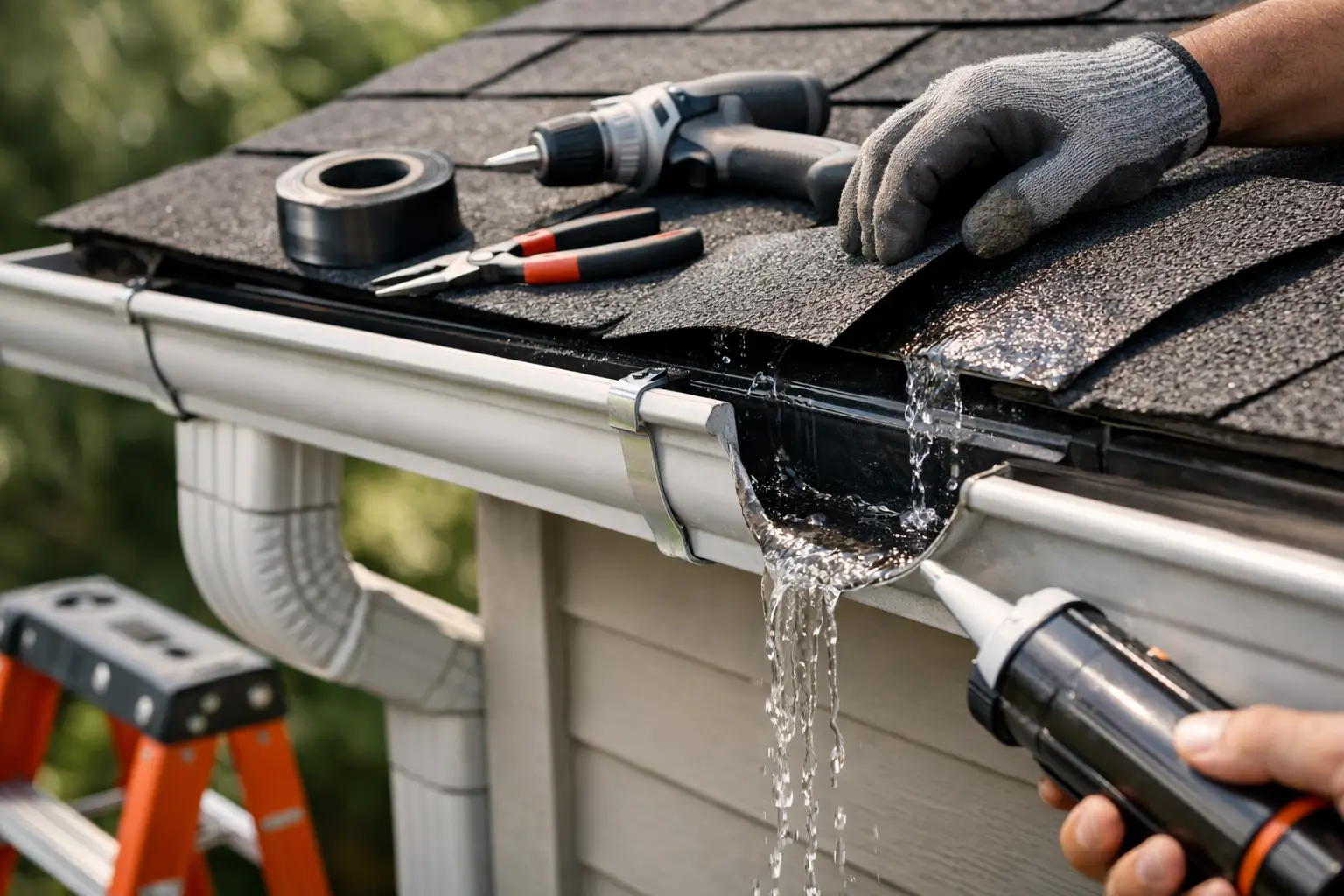
UPVC guttering commonly leaks at joints as seals age, fittings shift or dirt prevents a proper connection. In some cases, the joint can be cleaned and resealed. If the fitting is cracked, warped or no longer holds the gutter securely, replacing it is normally the more reliable option.
A good repair should not rely on excessive sealant. Sealant can help in the correct place, but it is not a long-term answer for a loose union, split outlet or poorly aligned gutter run. The fitting needs to be secure, clean and correctly positioned so the system can expand and contract with changes in temperature.
Gutters must have a slight fall towards the downpipe. Too little fall allows water to stand in the channel, encouraging dirt to settle and adding unnecessary weight. Too much fall can look untidy and may leave water entering the outlet too quickly in heavy rain.
Sagging often happens because brackets have loosened, broken or been spaced too far apart. Repositioning or replacing brackets can restore the correct line and prevent water sitting in the gutter. If the fascia board behind the brackets is rotten, the timber or UPVC fascia may need attention first. There is little value in securing new guttering to a weak roofline.
Small holes in metal guttering and short cracks in plastic sections may sometimes be repaired, depending on their location and the condition of the surrounding material. This can be a sensible lower-cost option where the rest of the run is in good order.
Where a gutter is brittle, badly dented or cracked in several places, replacement of that section is usually better value over time. Patching several weak areas can become a false economy, particularly on an older system that is already struggling through heavy rainfall. Matching new components to the existing profile also matters, as incompatible fittings can create further leaks.
A gutter can be perfectly clean yet still overflow when the downpipe is blocked, disconnected or undersized. Water may spill from the outlet, run down the wall and collect around the base of the property. This can lead to damp problems, staining and, over time, damage to paving or foundations.
Repairs may involve clearing a blockage, reconnecting a loose downpipe, replacing broken clips or fitting a new section. On larger roofs, extensions and commercial buildings, the drainage layout may need to be reviewed. Adding capacity or adjusting outlet positions can make a real difference during periods of sustained rain.
Gutter repair is often the right choice when the issue is limited to one joint, bracket, outlet or short length. It is usually quicker and more affordable than replacing an entire system, provided the remaining guttering is secure and correctly fitted.
Replacement becomes the stronger option when there are repeated leaks, widespread cracking, persistent sagging or damaged fascias. The same applies when a gutter has been repaired several times but continues to overflow. A new, correctly sized system can protect the roofline more effectively and reduce future maintenance.
Material also affects the decision. Modern UPVC is popular because it is durable, low-maintenance and available in several colours and profiles. Cast iron and aluminium systems can suit certain properties, but they need appropriate specialist repairs and should not be treated in the same way as standard plastic guttering. For period homes, preserving the appearance of the property may be as important as resolving the drainage fault.
Gutters are fixed to the roofline, so gutter problems often reveal issues with fascia boards, soffits or the eaves of the roof. Water that has repeatedly overflowed behind a gutter can rot timber fascias and weaken the fixings. If brackets are pulling out, simply tightening them may not be enough.
A proper inspection should check whether the fascia is firm, whether the soffit ventilation is clear and whether the roof edge is directing water into the gutter. Slipped tiles, worn felt or poor flashing can allow water to bypass the gutter entirely. In that situation, gutter work alone will not solve the problem.
This is particularly relevant after storm damage. Strong winds can dislodge brackets, lift gutter sections and expose weaknesses that were not obvious before. Acting promptly helps prevent a small external repair from becoming a larger roofing or internal damp issue.
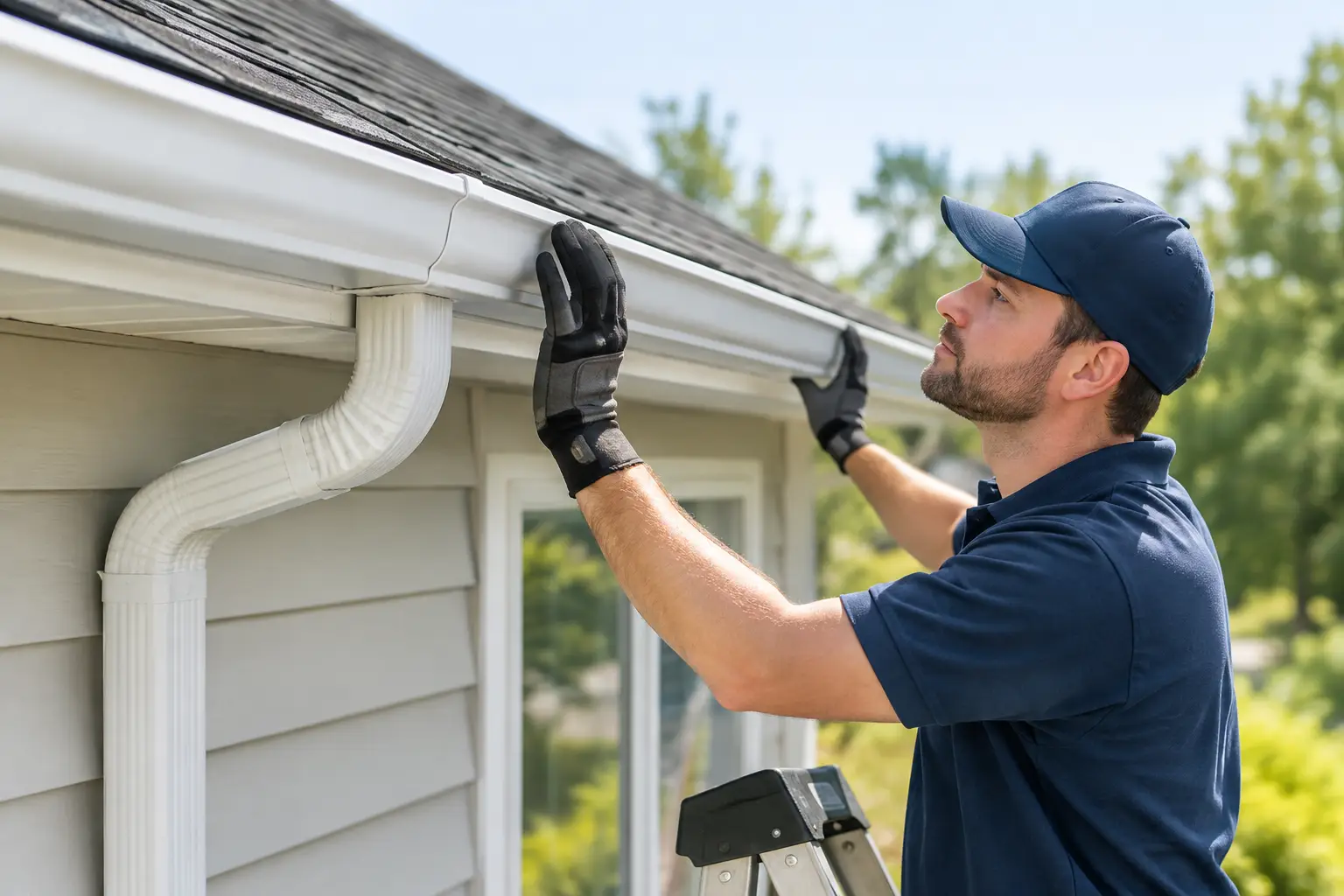
Safe gutter repairs often require working at height, assessing the roofline and handling drainage problems that are difficult to diagnose from the ground. A reliable local contractor should explain what has failed, show you the practical options and provide a clear quote before work begins.
Ask whether the repair includes checking the fall of the gutter, the condition of brackets, outlets and downpipes, and the state of the fascia behind the system. It is also reasonable to ask about insurance, workmanship cover and whether replacement parts will match the existing gutter profile.
For properties in Falkirk and across Central Scotland, Forth Valley Roofing provides practical gutter repairs alongside roofline and roofing work, so related faults can be identified rather than treated as separate problems. The aim is straightforward: get rainwater away from the property safely and keep it that way.
No gutter system is completely maintenance-free, particularly in areas exposed to wind, heavy rain and falling leaves. Checking gutters after severe weather and arranging a clean when debris builds up can prevent many leaks and overflows. Keep an eye on water marks around the eaves and listen for persistent dripping after rainfall, as both can point to a developing fault.
The most useful repair is the one that restores proper drainage without overlooking the roofline behind it. Deal with early signs of trouble, choose a repair that suits the condition of the system, and your gutters will continue doing the quiet but essential job of protecting your property.
See a gutter replacement project example, from the first inspection to fitting new gutters, and learn what protects a Central Scotland home in winter.

Does roof ventilation reduce condensation? Learn when roof vents help, what causes loft moisture and how to protect your Central Scotland home this winter.

Does roughcasting stop damp? Learn when new render protects Scottish homes, when it will not, and how to deal with leaks, cracks and condensation...