
October 7, 2026
See a gutter replacement project example, from the first inspection to fitting new gutters, and learn what protects a Central Scotland home in winter.

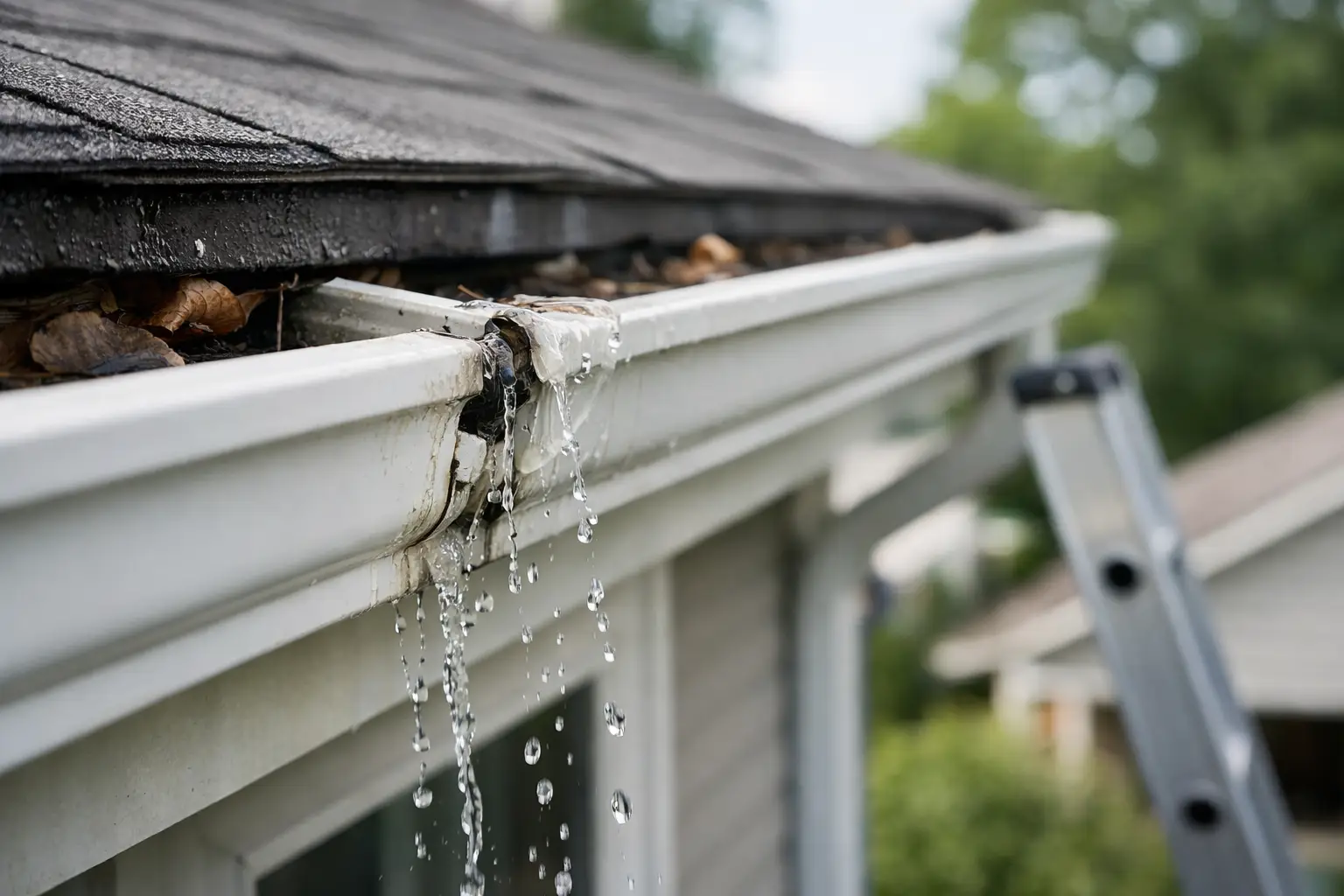
A drip from a gutter can seem minor until it starts marking the wall below, soaking the ground beside your foundations, or finding its way into the roof edge. In Central Scotland, frequent rain, wind-blown debris and winter freeze-thaw cycles can turn a small weakness into a more expensive repair surprisingly quickly. So, why is my gutter leaking? The answer is not always a hole in the gutter itself. Water may be overflowing, escaping from a joint, running behind the gutter, or being directed there by a fault higher up the roof.
The first step is working out where the water is coming from and when it appears. A leak during every shower suggests a different problem from one that only shows up in heavy rain or after a spell of frost. Avoid leaning ladders against gutters or climbing onto a roof unless you have the right equipment and experience. A ground-level inspection often tells you enough to decide whether cleaning, a straightforward repair or professional attention is needed.
This is the most common cause. Leaves, moss from roof tiles, twigs and wind-blown grit gather in the channel, particularly around outlets and corners. Once water cannot reach the downpipe freely, the gutter fills up and spills over the front or back edge.
Overflow at the front is easy to spot. Water running behind the gutter can be more damaging because it soaks the fascia board, roof edge and wall without always being obvious from below. If you notice damp staining beneath the eaves, peeling paint or a persistent dark patch on the brickwork or render, a blockage may be sending water in the wrong direction.
A downpipe can also be blocked even when the gutter looks clear. During rain, check whether water is pouring from the top of the downpipe outlet or whether the downpipe seems to be carrying very little water. Do not force rods or tools into old plastic pipes, as brittle fittings can crack or pull apart.
Most guttering is made up of separate lengths joined by union brackets, corners and outlets. These connections use rubber seals to keep water in. Over time, seals can dry out, move out of position or become coated in dirt and moss. Plastic guttering also expands in warm weather and contracts in cold weather, which can gradually cause a length to slip out of its fitting.
A joint leak is usually quite localised. You may see a steady drip from one connector while the rest of the gutter works normally. In some cases, cleaning the joint and reseating the gutter section solves the issue. If the seal is perished, the bracket is distorted or the gutter has become brittle, replacing the fitting is usually more reliable than applying sealant over the outside.
Sealant has its place, but it is rarely a lasting cure for a loose or badly aligned joint. It can also hide the real fault and make a later repair more difficult.
Older uPVC gutters can crack after years of sun, frost and movement. Cast iron systems may corrode, while aluminium can develop damage around fixings or joints. A small crack may only leak when the gutter is full, which is why it can be missed during light rain.
Look for a clean drip from the middle of a gutter run, rather than from a fitting. Also check for sagging sections where standing water sits after rain. A minor crack in an otherwise sound system may be repairable, but replacing a damaged length is often better value if the material is ageing or several faults are beginning to appear.
Gutters need a gentle fall towards the downpipe. It is not dramatic, but it allows water to move away without pooling. If brackets have loosened, snapped or been fixed at the wrong level, water can sit in one area or run away from the outlet.
Standing water puts extra weight on the gutter, especially during prolonged rainfall. That weight can pull brackets further from the fascia, worsen the fall and eventually create leaks at nearby joints. You may notice a gutter that bows in the middle, water that drips long after rain has stopped, or an outlet that is visibly higher than the rest of the run.
The fix depends on the condition of the fascia and the guttering. Repositioning or replacing brackets can restore the correct line where the board beneath is sound. If the timber fascia is rotten from repeated water exposure, it needs attention too. Simply fitting new brackets into weakened timber will not provide a dependable repair.
Water does not always enter the gutter as it should. A slipped roof tile, damaged roof felt, poorly fitted flashing or a leaking valley can send water behind the gutter line. This can look exactly like a gutter leak from the ground, particularly when water runs down the face of the fascia during heavy rain.
A roof edge issue is more likely if the gutter has been cleaned, the joints appear intact, and water still emerges from behind it. It can also be linked to old or inadequate eaves support, where the underfelt has deteriorated and no longer guides water into the gutter. This should be assessed properly, as water entering behind the fascia can cause hidden timber decay.
On flat roofs, ponding water near the edge, blocked outlets and damaged edge trims can create similar symptoms. The repair may involve the roof covering or drainage detail rather than the gutter itself.
Not every overflowing gutter is badly fitted. In exceptionally heavy rainfall, a narrow or shallow gutter may simply struggle to cope with the volume of water coming off a large or steep roof. This is especially noticeable where a roof valley directs a large amount of water into one short section of gutter.
Snow and ice bring another issue. Water trapped in a blocked gutter can freeze, expand and force joints apart. Heavy ice can also strain brackets and pull the gutter out of line. It is tempting to chip ice away, but striking plastic guttering can cause cracks. Let it thaw where possible, then arrange a check for blockages, loose fittings and damage.
If overflow happens only in intense downpours, the answer may be improving the drainage design rather than repeatedly cleaning the same system. Options can include an additional downpipe, a larger outlet or a higher-capacity gutter profile. The right choice depends on the roof area, its pitch and where water is concentrated.
You do not need to climb a ladder to spot many warning signs. During or shortly after rain, look for water spilling over an edge, drips at joints, damp patches on walls, loose downpipes or gutters visibly pulling away from the fascia. Binoculars can help you inspect higher sections without taking unnecessary risks.
Also look at the ground below. Splashback against the wall, eroded soil, moss growth and puddles beside the property may point to ongoing overflow. If a downpipe discharges too close to the building or into a blocked drain, water management at ground level may need attention as well.
Do not ignore a leak because it stops when the weather improves. Repeated wetting can lead to stained masonry, damaged render, decayed fascias and soffits, and moisture problems inside the property. For landlords and property managers, prompt repairs also help prevent a small external defect becoming a tenant maintenance issue.
Professional help is sensible when the gutter is high, access is difficult, the fault appears connected to the roof edge, or there is visible damage to fascias, soffits or masonry. It is also the safer option if a gutter has pulled away from the building, as the remaining brackets may be under strain.
A proper inspection should identify the source of the water before work begins. That matters because cleaning a gutter will not solve a failed joint, and replacing a joint will not stop water coming from damaged roof felt above it. The best repair is the one that addresses the cause, not just the visible drip.
Forth Valley Roofing can assess leaking gutters and the surrounding roofline, explain what has failed and provide a clear recommendation for repair or replacement. Whether the issue is a blocked outlet in Falkirk, a slipped gutter run or water tracking behind the fascia, dealing with it early helps keep the rest of the property dry and protected.
A gutter should quietly move rainwater away from your home. If it is leaking, overflowing or pulling loose, treat it as an early warning rather than an inconvenience. A timely check can protect the roof edge, walls and foundations before the next spell of heavy weather tests the system again.
See a gutter replacement project example, from the first inspection to fitting new gutters, and learn what protects a Central Scotland home in winter.

Does roof ventilation reduce condensation? Learn when roof vents help, what causes loft moisture and how to protect your Central Scotland home this winter.

Does roughcasting stop damp? Learn when new render protects Scottish homes, when it will not, and how to deal with leaks, cracks and condensation...