
October 8, 2026
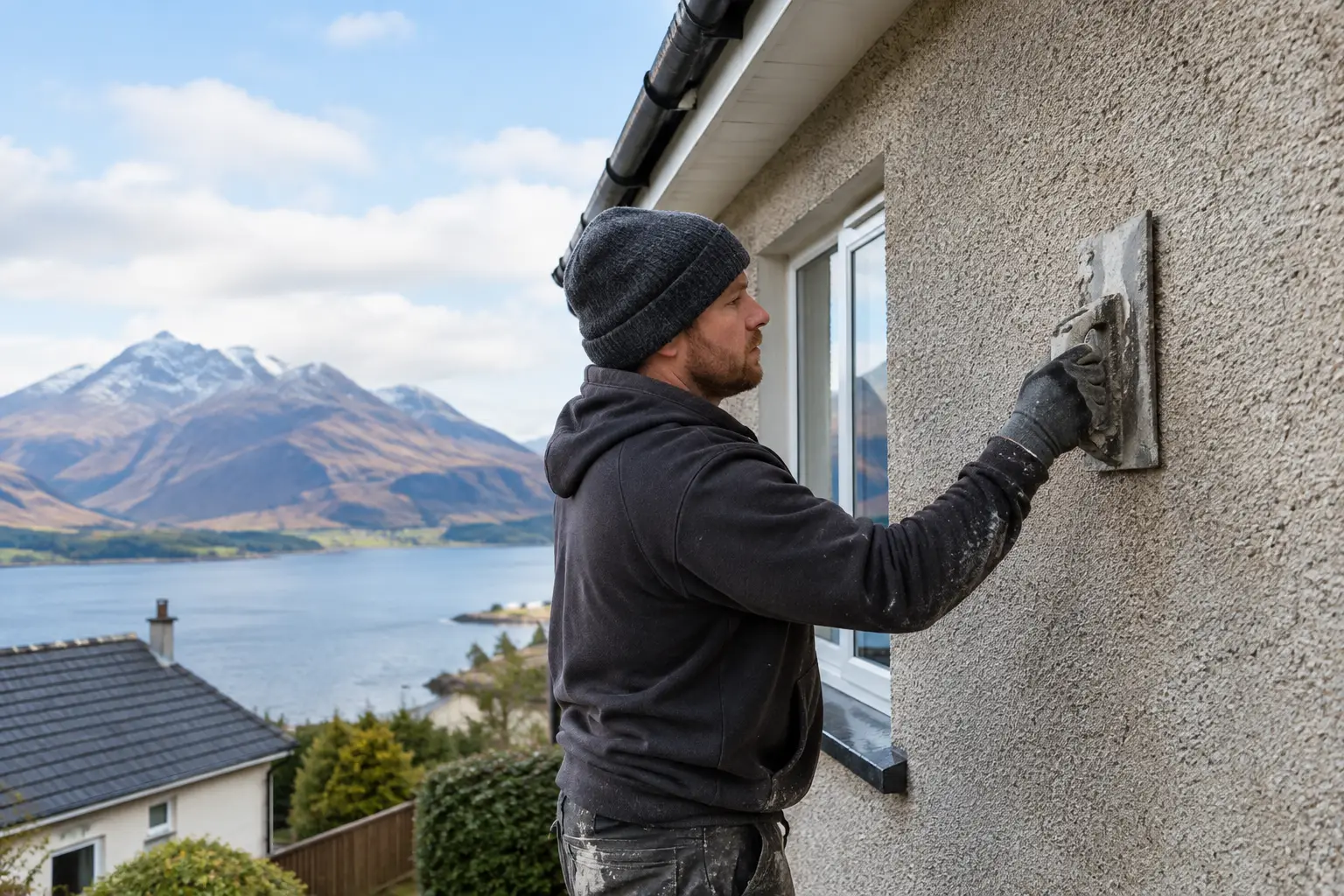
Is roughcasting worth it? See how this durable exterior finish protects Scottish homes, what affects the cost, and whether repair is enough for you...

A flat roof rarely fails without giving some warning. A damp patch on the ceiling, water sitting after rain, cracked edges around a skylight, or loose felt may seem minor at first. But in Central Scotland’s wet and changeable weather, small defects can let water reach the roof deck and insulation surprisingly quickly. This homeowner guide to flat roofing explains what to look for, what your choices mean, and when it is sensible to arrange professional help.
Most domestic flat roofs are not completely level. They are built with a slight fall so rainwater can run towards a gutter, outlet or internal drain. You will often find them on extensions, garages, porches, dormers, balconies and bay windows.
Because the slope is shallow, drainage matters more than it does on a pitched roof. A tiled roof sheds water quickly. A flat roof has to hold back standing water, cope with ultraviolet light and temperature changes, and remain watertight at every joint, edge and roof penetration. That is why the quality of the system and the fitting are just as important as the material chosen.
There is no single best material for every property. The right option depends on the roof’s size, shape, condition, intended use and budget. Access can also affect the cost, particularly where materials need to be carried through a property or where scaffolding is needed.
Modern torch-on felt is very different from the thin, short-lived felt many homeowners remember. It is usually installed in layers, with a durable mineral-finished top surface. It can be a practical choice for garages, porches and straightforward extensions, especially where a reliable, cost-conscious solution is needed.
Its performance depends heavily on properly formed laps, edges and details around pipes or walls. Felt can be repaired in some situations, but widespread cracking, blistering or lifting may indicate that the covering has reached the end of its serviceable life.
EPDM is a rubber membrane, commonly supplied in large sheets. Fewer seams can reduce the number of potential weak points on a simple roof, and the material is known for flexibility. It is often well suited to smaller domestic roofs where the surface can be covered in one piece.
The finish is usually plain black, which does not appeal to every homeowner visually, although appearance is less of a concern on an inaccessible garage or rear extension. As with all membranes, the perimeter trims, drainage points and joins to adjoining walls must be installed carefully.
GRP, sometimes called fibreglass roofing, creates a hard, continuous surface. It is commonly chosen for roofs with a clean, modern appearance and can work well on appropriately prepared timber decks.
A GRP roof needs the correct conditions during installation and a stable base beneath it. If the deck moves, or if the roof has been poorly detailed, cracks may develop. It is not automatically the best choice for every older roof, particularly if the structure needs repairs before a new covering can be applied.
Single-ply systems, including Fatra flat roofing membranes, are often used where long-term waterproofing and a professional finish are priorities. These membranes are mechanically fixed or adhered, with heat-welded joints that form a strong watertight seal when fitted correctly.
They can be a particularly good option for larger extensions, commercial buildings and roofs with more complicated detailing. The initial price can be higher than a basic felt repair, but a well-specified system may offer better long-term value where the roof is being fully renewed.
Ponding water is one of the most common reasons a flat roof deteriorates early. A small amount of water after heavy rain does not always mean immediate failure, especially if it clears soon afterwards. Water that remains for days, however, can put stress on the roof surface, encourage moss growth and reveal that the roof fall or outlet is inadequate.
Leaves, moss and grit can block gutters and outlets, particularly beneath trees. Check them safely from ground level where possible, and arrange cleaning if you cannot access them without risk. Never walk on a roof just to inspect a blockage unless it has been confirmed as safe to do so. Older roof decks can be weaker than they look.
A proper assessment should consider more than the visible covering. The roofer should check whether the roof has enough fall, whether water is reaching the correct outlet, and whether the guttering can cope during a downpour. Sometimes a local repair will solve the problem. In other cases, correcting the falls as part of a replacement is the more durable answer.
Water entering the room below is the clearest warning sign, but it is not the only one. Inside the property, look for staining, peeling paint, a musty smell, bubbling plasterboard or moisture around the ceiling edge. These can point to a roof leak, although condensation and defective wall flashing can produce similar symptoms.
Outside, warning signs include splits in the surface, open seams, lifted flashings, exposed felt layers, blisters, damaged trims and vegetation growing where it should not. Soft spots can indicate trapped moisture or deterioration in the timber deck beneath.
After a storm, check for obvious debris, slipped edge trims or overflowing gutters. Do not assume that a roof is sound simply because it is not actively leaking at that moment. Water can travel beneath a membrane before it appears indoors, making the point of entry difficult to identify without a close inspection.
A targeted repair can be sensible when damage is limited to one area and the surrounding roof covering remains in good condition. For example, a failed flashing around a wall junction, a damaged outlet, or a small split caused by impact may be repairable without renewing the whole roof.
Replacement is often the wiser investment where leaks keep returning, the roof is nearing the end of its expected lifespan, or the deck and insulation have been affected by moisture. Covering over an old roof can occasionally be appropriate, but it should not be treated as a shortcut. If the existing layers are wet, unstable or poorly bonded, they may need to come off so the underlying structure can be inspected and repaired.
Ask for a clear explanation of the proposed work. A useful quotation should state whether the old covering will be removed, what material is being installed, how edges and upstands will be finished, whether insulation is included, and how rainwater drainage will be addressed. The cheapest quote is not always the best value if these details have been left out.
Flat roof maintenance is usually straightforward, but it works best when it is regular. An annual visual check, plus another inspection after severe weather, gives you the chance to act before water finds its way inside. Keep gutters and outlets clear, cut back overhanging branches where practical, and avoid placing heavy items on the roof unless it was designed for them.
If you are planning solar panels, a roof terrace or other added load, have the roof structure assessed first. The waterproofing system may also need specific protection beneath supports or walkways. A roof that is suitable for occasional maintenance access is not necessarily suitable for regular foot traffic.
It is also worth keeping photographs and paperwork for roofing work. This creates a useful record for future maintenance, insurance discussions and a later house sale.
Flat roofing is detail-led work. The most visible part of the job may be the finished surface, but long-term performance often comes down to the less obvious areas: wall junctions, outlets, corners, drip edges and pipe penetrations.
Choose a contractor who visits the property, explains the options in plain language and provides a written quote rather than giving a vague price over the phone. Ask about insurance, workmanship cover and the guarantee provided. You should also be told honestly if a repair is unlikely to last because the rest of the roof is failing.
For homeowners across Falkirk and Central Scotland, Forth Valley Roofing can inspect flat roof problems, provide a free quote and recommend a repair or replacement based on the condition of the roof rather than a one-size-fits-all answer. The work is insured and backed by a 5-year guarantee.
A flat roof should not be a source of constant worry. Dealing with poor drainage, damaged details or early signs of wear now is usually far easier than repairing a soaked ceiling and timber structure later.
Is roughcasting worth it? See how this durable exterior finish protects Scottish homes, what affects the cost, and whether repair is enough for you...
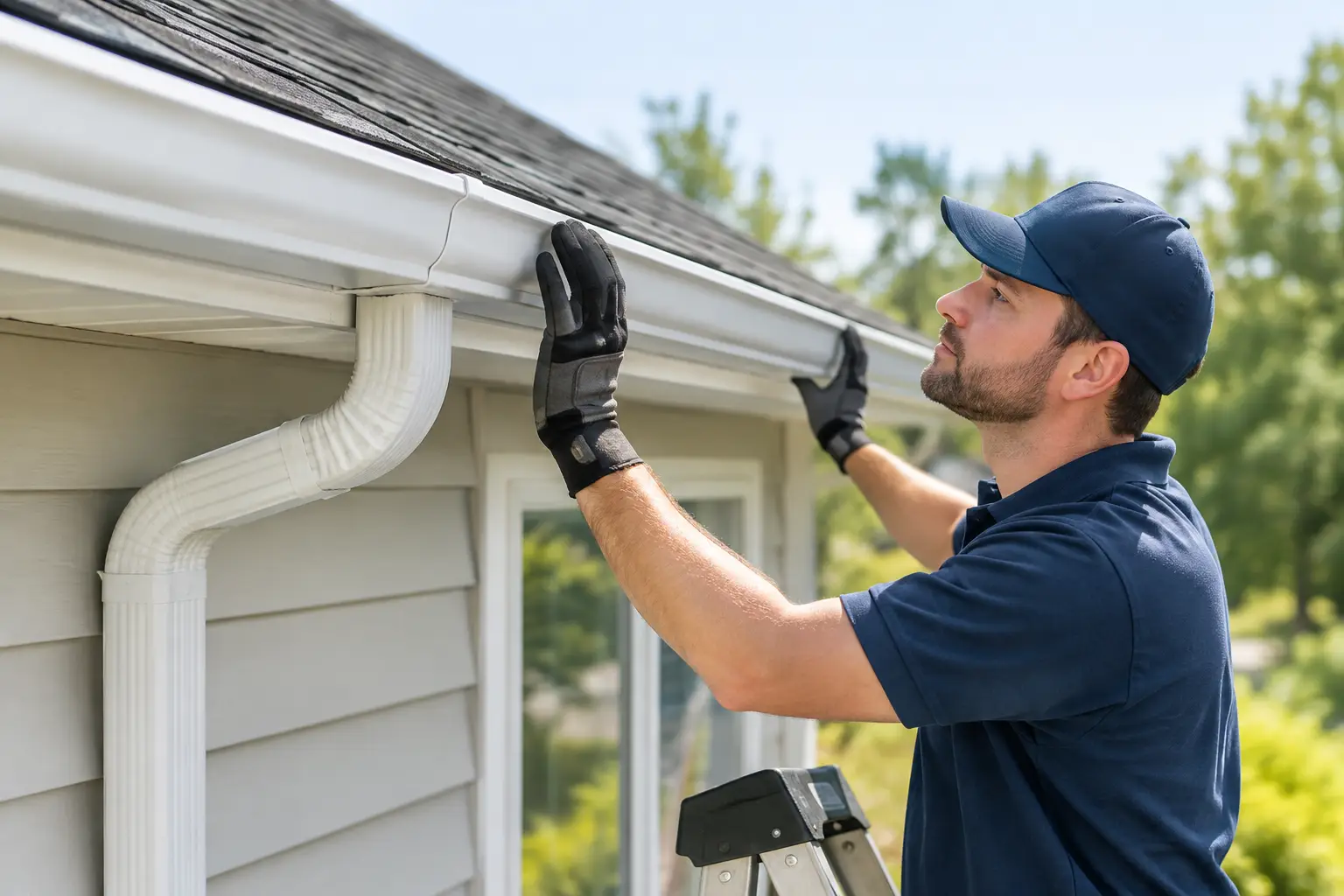
See a gutter replacement project example, from the first inspection to fitting new gutters, and learn what protects a Central Scotland home in winter.

Does roof ventilation reduce condensation? Learn when roof vents help, what causes loft moisture and how to protect your Central Scotland home this winter.