October 8, 2026
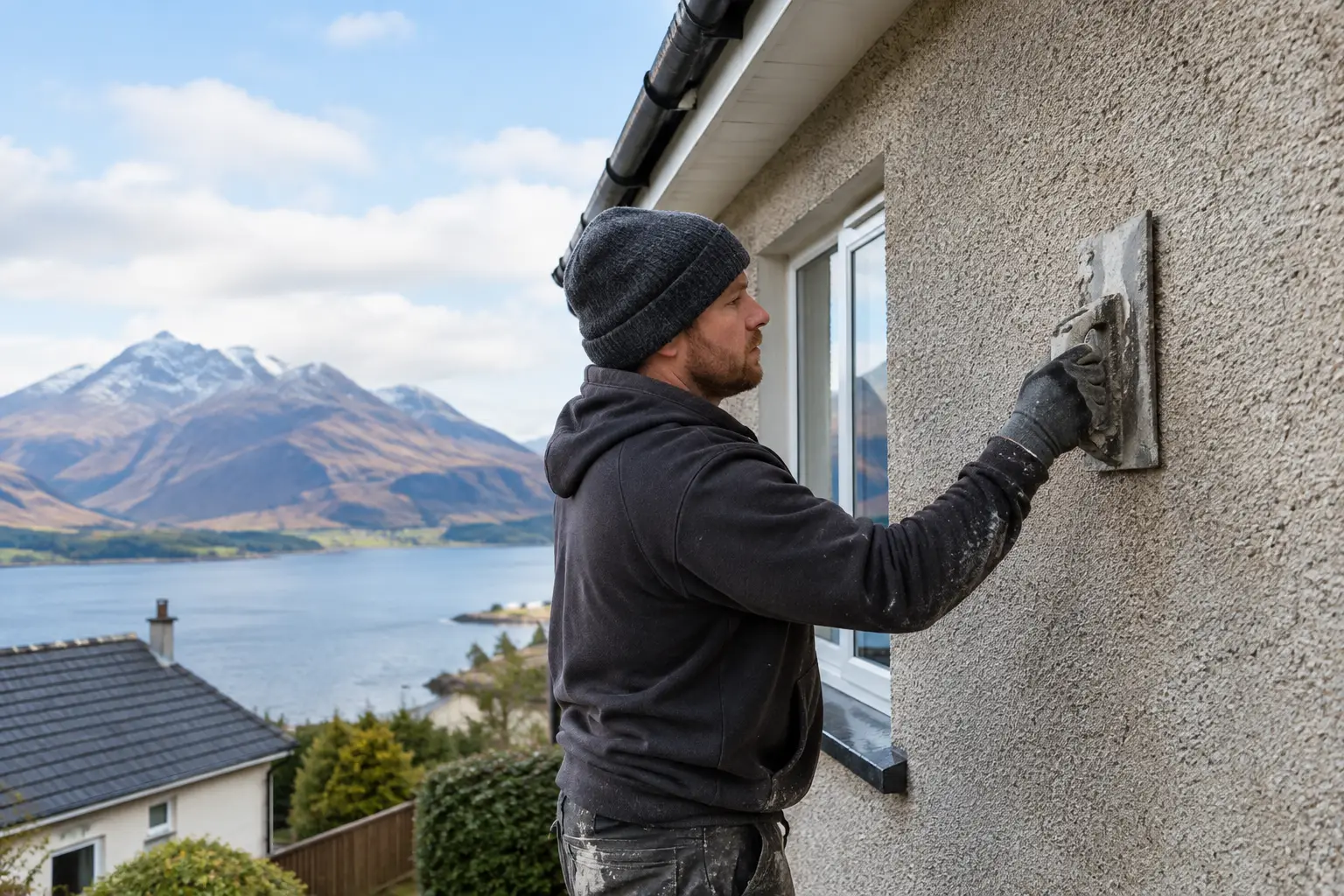
Is roughcasting worth it? See how this durable exterior finish protects Scottish homes, what affects the cost, and whether repair is enough for you...

A roof in Falkirk has to put up with a lot. Driving rain, strong winds, damp winters and the odd cold snap all test a roof far more than a glossy brochure ever will. If you are comparing the top roofing materials that perform best in Falkirk’s climate, the right choice usually comes down to how well a material handles moisture, wind uplift, temperature changes and long-term maintenance.
That is why the best roofing material is not always the cheapest to install, and it is not always the one that looks smartest on day one. A good roof for this part of Central Scotland needs to stay watertight, hold up in poor weather and suit the structure underneath it. For homeowners, landlords and property managers, getting that balance right can save a lot of stress and expense later.
Falkirk’s weather is rarely extreme in one dramatic way. The bigger issue is how often roofs are exposed to wet, windy and changeable conditions over the course of a year. Rain can work its way into weak points, moss can build up where drainage is poor, and repeated freeze-thaw cycles can widen small defects in older materials.
Wind is another factor that matters more than many property owners expect. If tiles are ageing, poorly fixed or already cracked, gusts can shift them just enough to let water in. That is why material strength on its own is only part of the picture. Fixing method, roof pitch, ventilation and installation quality all matter just as much.
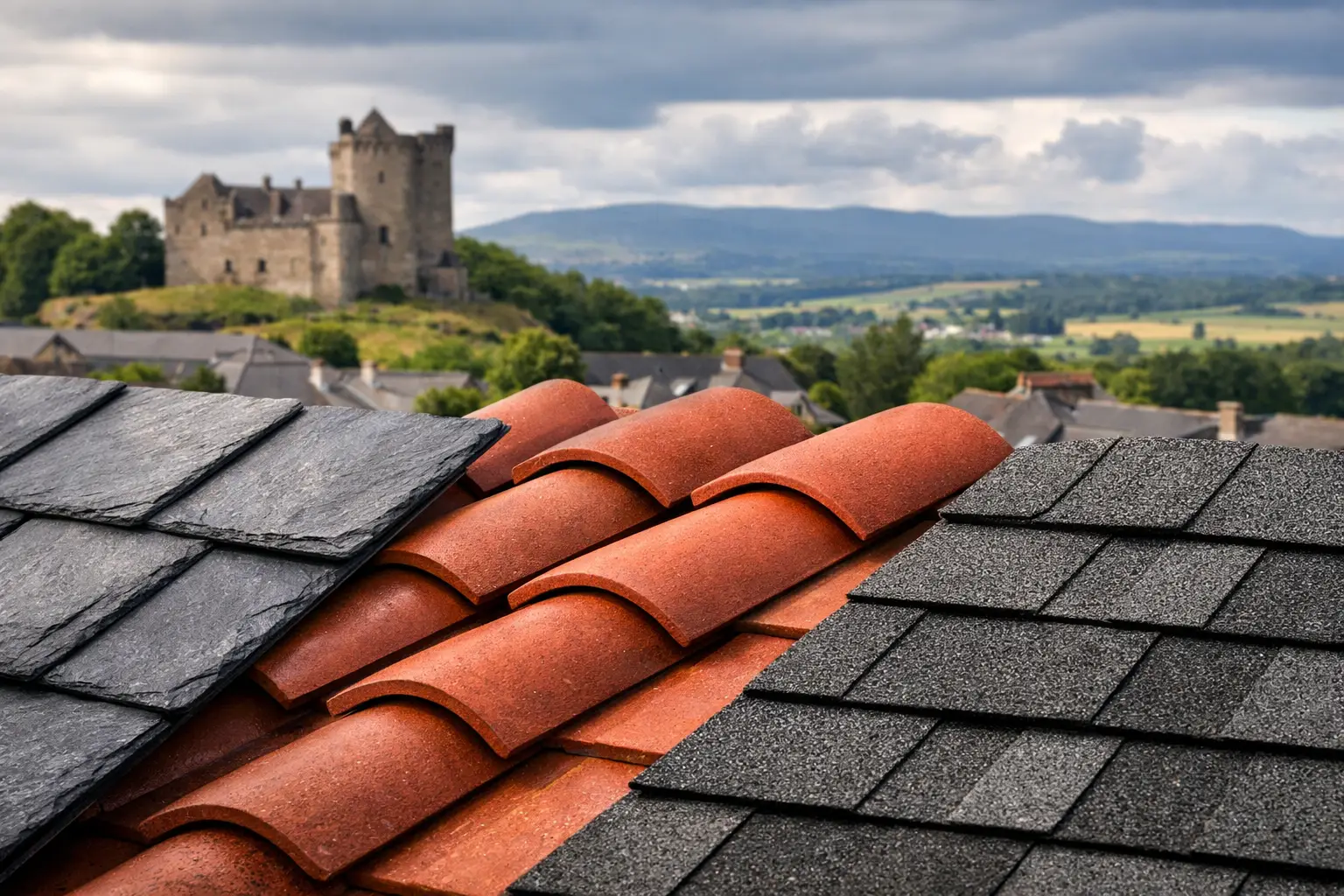
Natural slate remains one of the strongest options for pitched roofs in Falkirk. It deals well with persistent rain, stands up to cold weather and has an excellent lifespan when installed properly. For many traditional homes across the area, it also suits the character of the property better than modern alternatives.
The main advantage of slate is durability. A properly laid slate roof can last for decades, and it generally performs very well in damp Scottish conditions. It is also resistant to rot and insect damage, which gives it an edge over some older roofing systems.
The trade-off is cost. Slate is heavier than many other materials, so the roof structure needs to be suitable for it. Repairs can also be more specialised. If individual slates slip or crack, the fix itself may be straightforward, but matching the existing roof and carrying out the work properly matters.
For period properties or homeowners planning a long-term investment, slate is often one of the best-performing choices available.
Concrete tiles are popular for a reason. They offer solid weather resistance, good availability and a lower upfront cost than natural slate. On many homes in Falkirk, they strike a sensible balance between performance, appearance and budget.
Modern concrete tiles cope well with normal Scottish weather, especially when the roof is correctly installed with sound underlay, battens and ridge detailing. They are available in a range of profiles and finishes, so they can suit both older and newer houses.
That said, concrete tiles are not maintenance-free. Over time, the surface can weather, and moss growth may become more noticeable in shaded or damp spots. They are also fairly heavy, so structural suitability still matters. While concrete can last a long time, it will not always match the lifespan or premium look of good natural slate.
For many homeowners who want a dependable pitched roof without the cost of slate, concrete tile is a practical and proven option.
Clay tiles perform well in wet conditions and can have a very long service life. They are often chosen for their appearance as much as their performance, particularly on homes where a warmer, more traditional finish is preferred.
Compared with concrete, clay tends to hold its colour better over time and can look more refined. It is also highly resistant to weathering. In the right setting, it can be an excellent long-term roofing material for Falkirk’s climate.
The downside is that clay is usually more expensive than concrete and can be more brittle under impact. If you have overhanging trees or there is a risk of occasional breakage during access or maintenance work, that is worth considering. Like slate, clay also needs correct installation and a roof structure capable of supporting the load.
Metal roofing is becoming a more common discussion point, especially for extensions, outbuildings, commercial premises and some modern homes. Used properly, it can perform very well in Falkirk’s climate because it sheds rain quickly and can offer strong resistance to wind and moisture.
The biggest strengths of metal are low water absorption and relatively lightweight construction. It can be particularly useful where reducing load on the structure is important. Modern systems also come with protective coatings designed to resist corrosion.
However, metal is not automatically the best answer for every property. It needs careful detailing around joints, edges and penetrations. Noise can also be a concern if the roof build-up is poor, although proper insulation usually reduces this significantly. Aesthetics matter too. On some homes it looks sharp and contemporary, while on others it can feel out of place.
For certain property types, especially where speed of water run-off and lightweight performance are priorities, metal can be a strong option.
Flat roofs need special mention because many homes and commercial buildings in Falkirk have them on extensions, garages, dormers and porches. In this setting, the question is less about tile versus slate and more about choosing a membrane or covering that can cope with standing water, UV exposure and temperature changes.
Older felt roofs often struggle after years of weathering, patch repairs and pooled water. Newer flat roofing systems are a different standard altogether. High-performance membranes such as Fatra can offer excellent durability, strong waterproofing and a clean finish when installed by experienced roofers.
This is one area where installation quality is absolutely critical. A flat roof is less forgiving than a pitched one if falls are poor or detailing is weak. The best material in the world will not perform as it should if outlets, upstands and seams are not handled correctly.
For flat roof areas in Falkirk, modern single-ply systems are often among the best long-term choices, particularly where reliability and low maintenance are priorities.
When people ask about the top roofing materials that perform best in Falkirk’s climate, the honest answer is that workmanship matters just as much as the product itself. A premium slate roof fitted badly will give more trouble than a well-installed concrete tile roof. The same goes for flat roofing, where poor detailing is often the real cause of failure.
Ventilation, leadwork, flashing, guttering and drainage all affect how well a roof performs over time. If water is not being directed away properly, even a strong roofing material can end up under unnecessary strain. That is why a proper survey matters before recommending any replacement.
If you own a traditional property and want maximum lifespan with a finish that suits the building, slate is often the strongest choice. If you want dependable performance at a more manageable cost, concrete tiles are usually a sensible option. If appearance is a big factor and the budget allows, clay can work very well. If the roof is flat, a modern membrane system is normally the way to go.
The age and condition of the roof structure should always be checked first. There is no benefit in choosing a heavier or more expensive material if the underlying timber, ventilation or support is not suitable. Equally, if only part of the roof is failing, a targeted repair may be better value than a full replacement.
For landlords and property managers, maintenance requirements should also shape the decision. A roof that looks good but needs frequent attention may not be the most cost-effective option over ten or fifteen years. Long-term performance usually beats short-term savings.
It is understandable to focus on installation price. Roofing work is a major investment, and most customers want a clear idea of what they are paying for. But the better question is often what the roof will cost over its whole life, not just on the day it is fitted.
A cheaper material may still be the right choice if it is suitable for the property and installed properly. Problems start when price becomes the only factor. Early repairs, storm damage, recurring leaks and avoidable maintenance can quickly wipe out any saving.
That is why local advice is worth having. A roofer who regularly works in Falkirk will know which materials hold up well in the area and which corners are likely to cause trouble later. Companies such as Forth Valley Roofing see first-hand how different systems perform after years of Scottish weather, not just how they look in a catalogue.
Choosing a roof is really about matching the material to the building, the budget and the conditions it has to face every year. Get that right, and you are not just improving the look of the property – you are giving it proper protection where it counts.
Is roughcasting worth it? See how this durable exterior finish protects Scottish homes, what affects the cost, and whether repair is enough for you...
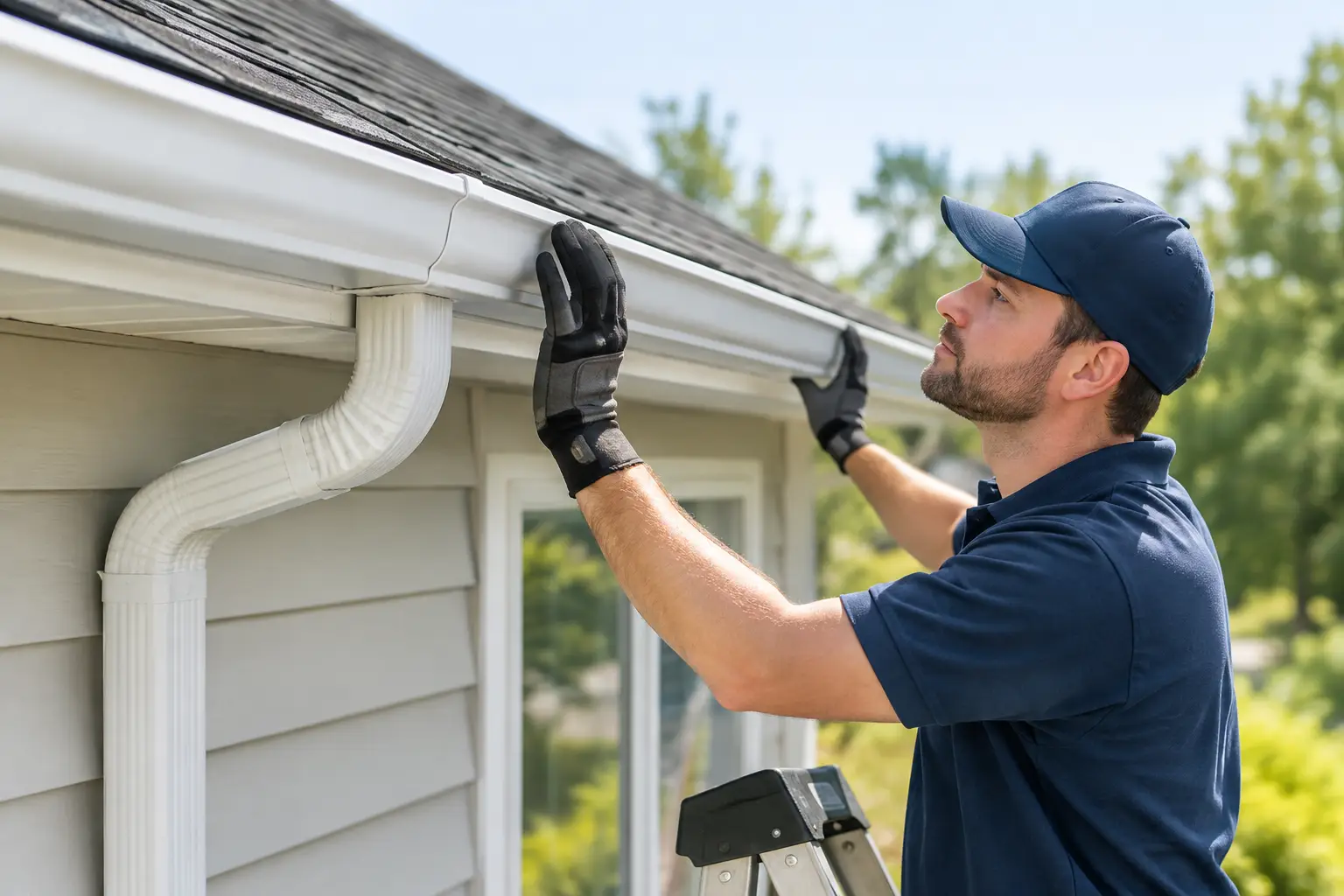
See a gutter replacement project example, from the first inspection to fitting new gutters, and learn what protects a Central Scotland home in winter.

Does roof ventilation reduce condensation? Learn when roof vents help, what causes loft moisture and how to protect your Central Scotland home this winter.