
October 7, 2026
See a gutter replacement project example, from the first inspection to fitting new gutters, and learn what protects a Central Scotland home in winter.

A roof replacement is not a purchase most property owners make lightly. When comparing a slate versus tile roof, the material affects more than the appearance of your home. It can change the overall cost, the weight carried by the roof structure, future maintenance needs and how well the roof suits the character of the property.
For homes across Falkirk and Central Scotland, the right choice often comes down to the existing roof, local planning considerations, budget and how long you expect to own the property. Both slate and tiles can provide excellent protection when fitted properly. The key is choosing a material that is right for the building rather than simply choosing the cheapest option at the time.
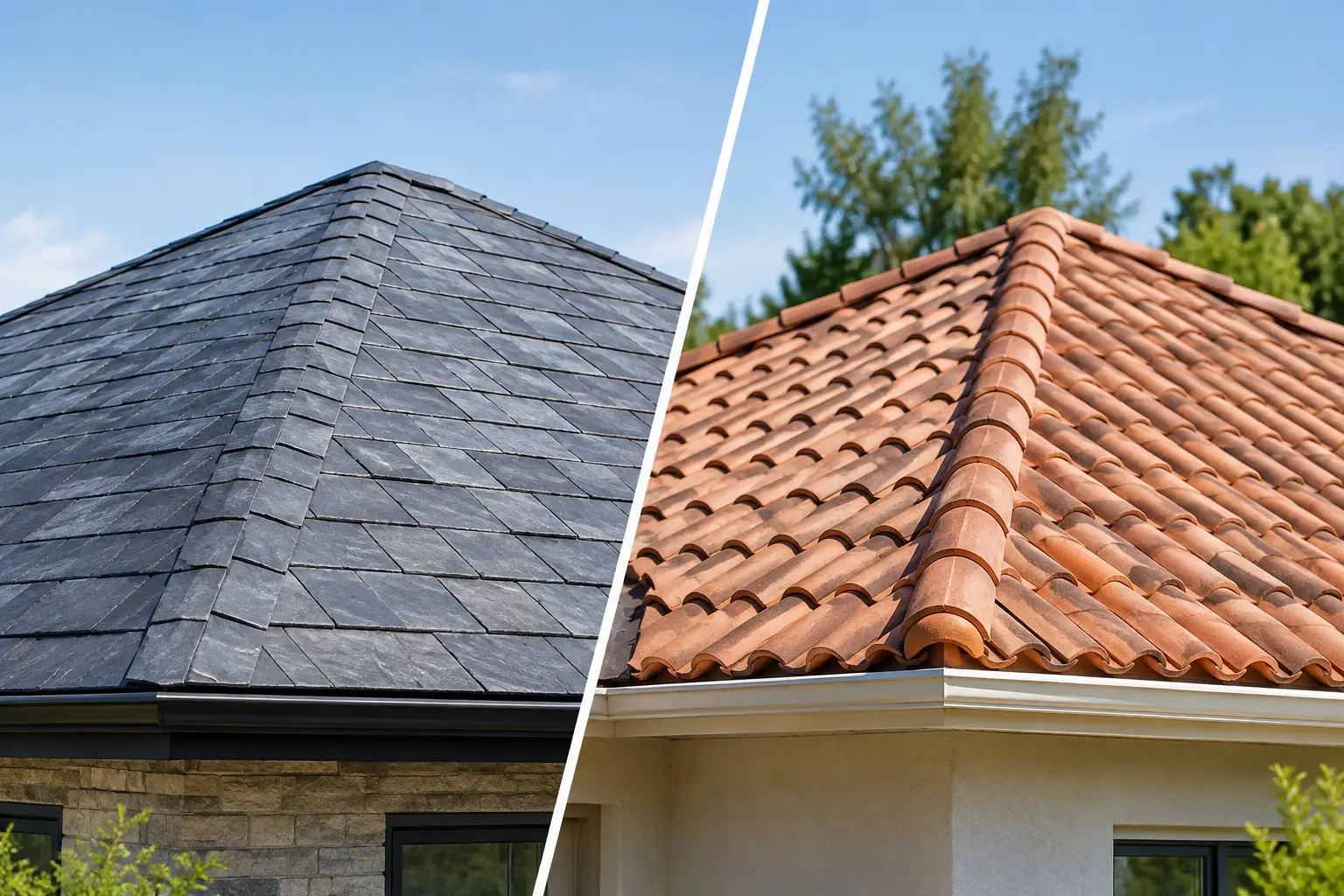
Natural slate is a stone product, split into thin individual slates and fixed in overlapping courses. It has a traditional finish that is particularly common on older Scottish properties, period homes and buildings in conservation areas. Good-quality natural slate is exceptionally durable and develops very little visual change as it ages.
Roof tiles are manufactured products, usually made from concrete or clay. They are available in a wider range of profiles, colours and finishes than slate, from traditional flat tiles to interlocking designs. Modern tiles are widely used on newer homes and can be a practical choice where the roof structure and surrounding properties suit them.
The best material is not always the one with the longest potential lifespan. A heavy tile may not be suitable for a roof originally designed for slate, while a new tiled roof can look out of place on a traditional stone cottage. A proper inspection should look at the full roof structure before a recommendation is made.
Slate gives a clean, refined appearance that works especially well with sandstone, stone and older rendered properties. It is available in different shades, including blue-grey, grey, green and purple tones, although colour variation depends on the quarry and the slate itself. On many traditional homes, replacing slate with a different material can noticeably alter the building’s character.
Clay tiles offer a warmer, more traditional look and are often seen in red, brown and mixed shades. They can suit cottages, detached homes and certain newer developments. Concrete tiles are usually more uniform in appearance, with a broad choice of colours and profiles to complement modern properties.
If you are replacing only one section of a roof after storm damage or carrying out an extension, matching the existing covering matters. New materials can look noticeably different beside weathered slate or older tiles. In some cases, reclaimed slate or carefully selected tiles may provide a better match, but their condition should always be checked before fitting.
Properties in conservation areas, listed buildings and homes with a distinctive original roof may be subject to additional requirements. Natural slate may be expected where it is part of the building’s existing appearance. Before changing the roof material, it is sensible to check whether consent is needed.
Even where formal permission is not required, keeping an appropriate roof covering can help maintain the property’s appearance and value. This is particularly relevant for older homes in Stirling, Edinburgh and established parts of Falkirk where traditional rooflines are a visible part of the street scene.
Natural slate generally costs more to supply and install than concrete tiles. The material itself is more expensive, and laying individual slates correctly is skilled work that takes time. Roof details such as valleys, hips, dormers, chimneys and leadwork can also add to the cost.
Concrete tiles are often the lower-cost option for a full replacement. They are readily available and, depending on the profile, can be quicker to install. Clay tiles tend to sit between concrete tiles and high-quality natural slate, although prices vary considerably by manufacturer, style and roof design.
The initial quote should not be the only figure considered. A well-fitted slate roof may last for generations, whereas a tile roof may need more substantial renewal sooner. That does not automatically make slate the better value choice. If the building requires structural strengthening, the total cost may rise sharply, and a quality tile system could be the more sensible investment.
A clear roofing quote should set out what is included: stripping the old roof covering, timber repairs where required, breathable membrane, battens, fixings, lead flashings, waste removal and access equipment. Comparing like-for-like specifications is the fairest way to judge value.
Weight is one of the most important technical points in a slate versus tile roof decision. Roof coverings place a permanent load on rafters, trusses and supporting walls. Some concrete tiles are considerably heavier than natural slate, especially when the added weight of battens, underlay and snow is considered.
A roof that was built for slate should not simply be covered with heavier tiles without checking the structure. Older timber can be sound, but it may also have weakened through moisture, woodworm or historic alterations. Adding an unsuitable covering can lead to sagging rooflines, cracked plaster, movement around walls or more serious structural issues.
Conversely, replacing heavy concrete tiles with slate may reduce the load on the building, but the roof pitch and detailing still need to be suitable. Each material has manufacturer requirements for minimum pitch, fixing pattern and overlap. These details matter because they control how water is shed during persistent rain and strong winds.
High-quality natural slate can last 100 years or more. Its long lifespan is one reason it remains a popular choice for traditional properties. However, slate roofs are not maintenance-free. Individual slates can crack, slip or loosen as fixings age, and valleys, ridges and flashings still need periodic attention.
Concrete tiles commonly have a shorter working life, often around 40 to 60 years, depending on product quality, exposure and maintenance. Clay tiles can last longer and can perform very well, but they are not immune to frost damage, impact damage or failed fixings. In all cases, the underlay, battens and leadwork may need attention before the covering itself reaches the end of its life.
Repairs are often straightforward when damage is limited to a small area. Replacing a few slipped slates or cracked tiles promptly is far less costly than allowing rainwater to reach the roof timbers. Moss should also be treated carefully. Aggressive pressure washing can damage tiles, dislodge pointing and force water beneath the roof covering.
Rain, wind, frost and repeated wet-dry cycles are hard on every roof. Slate performs particularly well in wet conditions because it sheds water effectively and does not absorb much moisture. It is also highly resistant to frost when good-quality slate is used.
Tiles can perform just as reliably when they are properly specified and fixed. Interlocking tile systems are designed to resist wind uplift, but installation quality is crucial. The correct nails, clips, overlaps and verge details are needed, especially on exposed properties and homes close to open ground.
A roof covering alone does not prevent leaks. Chimney flashings, roof valleys, abutments, gutters and ventilation details are common weak points. A good installation considers the complete system rather than treating slate or tiles as a stand-alone choice.
Slate is often the stronger option for period homes, listed properties and roofs where maintaining an original appearance is a priority. It also makes sense for homeowners planning a long-term investment and willing to pay more upfront for a material with an exceptional potential lifespan.
It can be particularly suitable where the existing structure was designed around a traditional slate covering. Natural slate is not identical in every case, though. The source, thickness, grading and fixing method all affect performance, so choosing reputable materials and experienced roofers is essential.
A tiled roof can be an excellent choice for modern homes, extensions and properties where the existing roof is already tiled. It may offer a more affordable replacement route, a wider choice of colours and profiles, and a finish that fits the surrounding homes.
Tiles can also be the practical answer where matching the local style matters more than replicating a traditional slate roof. The important point is to confirm that the roof pitch and structural capacity are suitable for the selected tile. A cheaper product is not a saving if it creates problems with weight, water run-off or durability later on.
Before committing to either material, arrange a roof assessment that looks beyond the visible surface. Forth Valley Roofing can inspect the condition of the existing covering, timbers, flashings and drainage, then explain the practical options in plain language. The right roof is the one that protects your property properly, suits its character and gives you confidence when the next spell of Scottish weather arrives.
See a gutter replacement project example, from the first inspection to fitting new gutters, and learn what protects a Central Scotland home in winter.

Does roof ventilation reduce condensation? Learn when roof vents help, what causes loft moisture and how to protect your Central Scotland home this winter.

Does roughcasting stop damp? Learn when new render protects Scottish homes, when it will not, and how to deal with leaks, cracks and condensation...