October 7, 2026
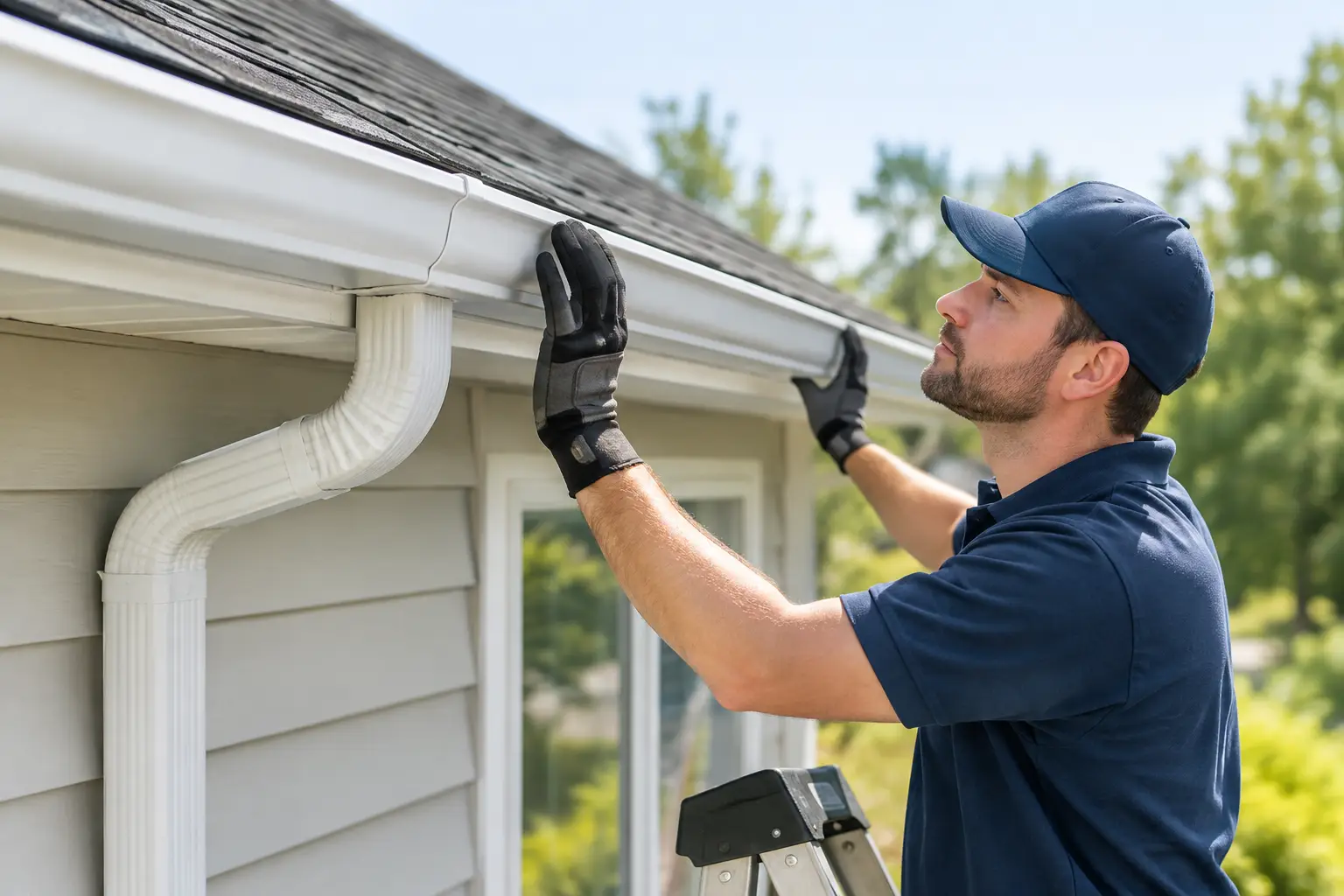
See a gutter replacement project example, from the first inspection to fitting new gutters, and learn what protects a Central Scotland home in winter.

A roof in Scotland has a harder job than most. It needs to cope with driving rain, strong winds, frost, moss growth and the kind of temperature swings that expose weak materials fast. That is why choosing the best roof tiles for Scotland is not really about what looks nicest in a brochure. It is about what performs well year after year on your particular property.
For homeowners and landlords, the right choice usually comes down to three things – weather resistance, lifespan and cost over time. There is no single tile that suits every roof, and anyone telling you otherwise is oversimplifying it. The best option for a traditional stone cottage in a more exposed spot may be different from the right fit for a newer semi-detached home in a sheltered estate.
Scotland’s climate puts constant pressure on roofing materials. Heavy rainfall can test how well tiles shed water, while strong gusts can lift poorly fixed or lightweight coverings. In winter, freeze-thaw cycles matter too. If a tile absorbs too much water, that moisture can freeze, expand and gradually weaken it.
That is why low water absorption, good fixing methods and solid installation standards matter just as much as the tile itself. A decent tile fitted badly will still cause problems. Equally, a more affordable tile fitted properly can often outlast expectations.
Roof pitch also plays a part. Some tiles are better suited to steeper roofs, while others can work on lower pitches when installed to the manufacturer’s specification. The age and structure of the property matter as well, because heavier materials may require stronger roof timbers.
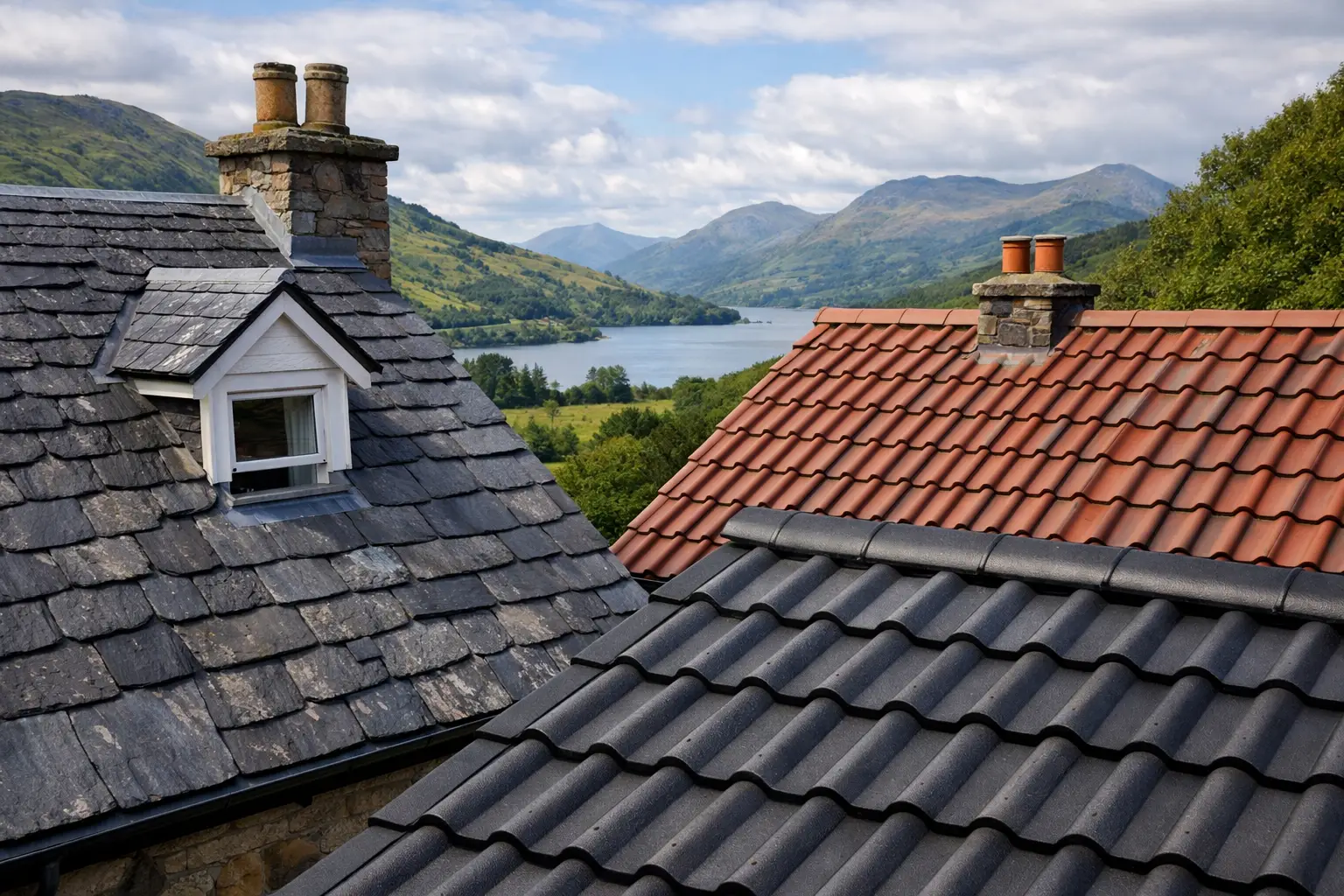
Natural slate is often the benchmark for Scottish roofing, and with good reason. It handles wet weather well, has a long lifespan and looks right on many traditional properties. In older parts of Central Scotland, slate roofs are part of the local character, so replacing like for like can protect both appearance and value.
A good slate roof can last for decades, sometimes far longer than concrete or clay alternatives. Slate also has low water absorption, which helps in cold and wet conditions. Visually, it is hard to beat. It gives a roof a clean, solid look that suits everything from period homes to better-quality modern builds.
The trade-off is cost. Natural slate is usually one of the more expensive options both in materials and labour, as it takes skill to fit properly. Not all slate is equal either. Some imported slates are less durable than high-grade Welsh or Spanish products, so the source matters.
Concrete tiles are one of the most common choices for homes across Scotland because they offer a practical balance of durability and affordability. For many homeowners replacing an ageing roof, they make financial sense without looking cheap.
Modern concrete tiles are available in a range of profiles and colours, including styles that imitate slate. They are strong, widely available and generally cope well with Scottish weather when fitted correctly. If budget is a concern but you still want a roof with a decent service life, concrete is often the sensible middle ground.
They are heavier than some people expect, so the roof structure needs to be suitable. Over time, the surface can weather and the colour may fade a little, especially on older products. Concrete tiles can also be more prone to moss growth than slate in damp, shaded areas, although that is often more of a maintenance issue than a serious defect.
Clay tiles are known for their appearance and longevity. They are common on certain property styles and can give a warmer, more distinctive finish than concrete. Good-quality clay tiles can perform very well in wet climates and tend to hold their colour better than many concrete options.
That said, clay is not always the first choice in Scotland, especially in areas where slate or concrete are more in keeping with local housing stock. It can also be more expensive than concrete, and some clay profiles are not the best fit for every roof pitch or every exposure level.
On the right property, though, clay can be an excellent long-term investment. It is especially worth considering if aesthetics are high on your list and you want something with a more traditional, premium feel.
If your main concern is harsh weather performance, natural slate is often the strongest overall option. It is well proven in Scottish conditions and offers excellent resistance to rain and frost. For exposed locations or older homes, it is often the safest long-term bet if the budget allows.
If you want a dependable and more affordable material, concrete tiles are hard to ignore. For many homes in Falkirk, Stirling and surrounding areas, they provide the best balance between price and performance. A properly installed concrete tile roof can give many years of reliable service.
Clay tiles sit somewhere in between depending on the product used and the property style. They can be very durable, but they are usually chosen as much for appearance as for raw practicality.
Roofing decisions are rarely made on material alone. Budget matters, but so does the cost of ownership over the next 20 to 50 years.
A cheaper tile is not always the cheaper roof. If it needs more maintenance, does not suit the property, or has a shorter lifespan, the savings at the start can disappear later. On the other hand, paying for premium slate on a modest property where concrete would perform perfectly well may not always be the most sensible use of money.
This is where honest advice matters. The best recommendation depends on whether you are planning to stay in the property long term, preparing a rental for durability, or replacing a roof before selling. Different goals can justify different choices.
Performance comes first, but kerb appeal should not be ignored. Roofs take up a large part of what people see from the street, and the wrong tile can look out of place very quickly.
Slate usually suits Scottish homes naturally, particularly older terraces, villas and cottages. Concrete works well on many modern and mid-century homes, especially where neighbouring properties already have similar coverings. Clay can suit certain house styles beautifully, but it needs to feel appropriate to the building rather than chosen in isolation.
If your property is in a conservation area or has planning restrictions, material choice may also be limited. That is another reason not to pick a product based on price alone.
The best roof tiles for Scotland will only do their job if they are installed properly. Underlay, battens, ridge systems, ventilation and fixings all have a direct impact on how the roof performs. In windy areas especially, secure fixing is not optional.
Poor workmanship often shows up long before the tile itself fails. Slipped tiles, leaks around junctions, weak ridges and badly finished edges are usually installation problems rather than product problems. A sound roof is a system, not just a surface material.
That is why a proper site inspection matters before any replacement is priced. The roof pitch, existing timber condition, exposure level and property type all need to be assessed first. A local contractor with experience of Scottish weather will usually give more useful advice than a generic online comparison table.
For many properties, concrete tiles are the practical choice. They are cost-effective, reliable and suitable for a wide range of homes. If you want solid performance without stretching the budget unnecessarily, they often come out on top.
If your home is older, more exposed, or already has a slate roof, natural slate is often worth serious consideration. It costs more up front, but it offers proven durability and a finish that is difficult to match.
Clay tiles are a strong option where style is a priority and the property suits them. They are not the default choice for every Scottish roof, but on the right house they can be an excellent fit.
At Forth Valley Roofing, this is usually the point where we tell customers the same thing we would tell our own neighbours – choose the roof tile that suits your property, not just the one with the lowest quote. A roof should protect your home properly, look right for the building and give you confidence when the weather turns.
If you are weighing up tile options, the most useful next step is not guessing from photos. It is getting clear advice based on your roof, your area and how long you need the solution to last. The right choice tends to become much clearer once those pieces are in place.
See a gutter replacement project example, from the first inspection to fitting new gutters, and learn what protects a Central Scotland home in winter.

Does roof ventilation reduce condensation? Learn when roof vents help, what causes loft moisture and how to protect your Central Scotland home this winter.

Does roughcasting stop damp? Learn when new render protects Scottish homes, when it will not, and how to deal with leaks, cracks and condensation...