
October 8, 2026
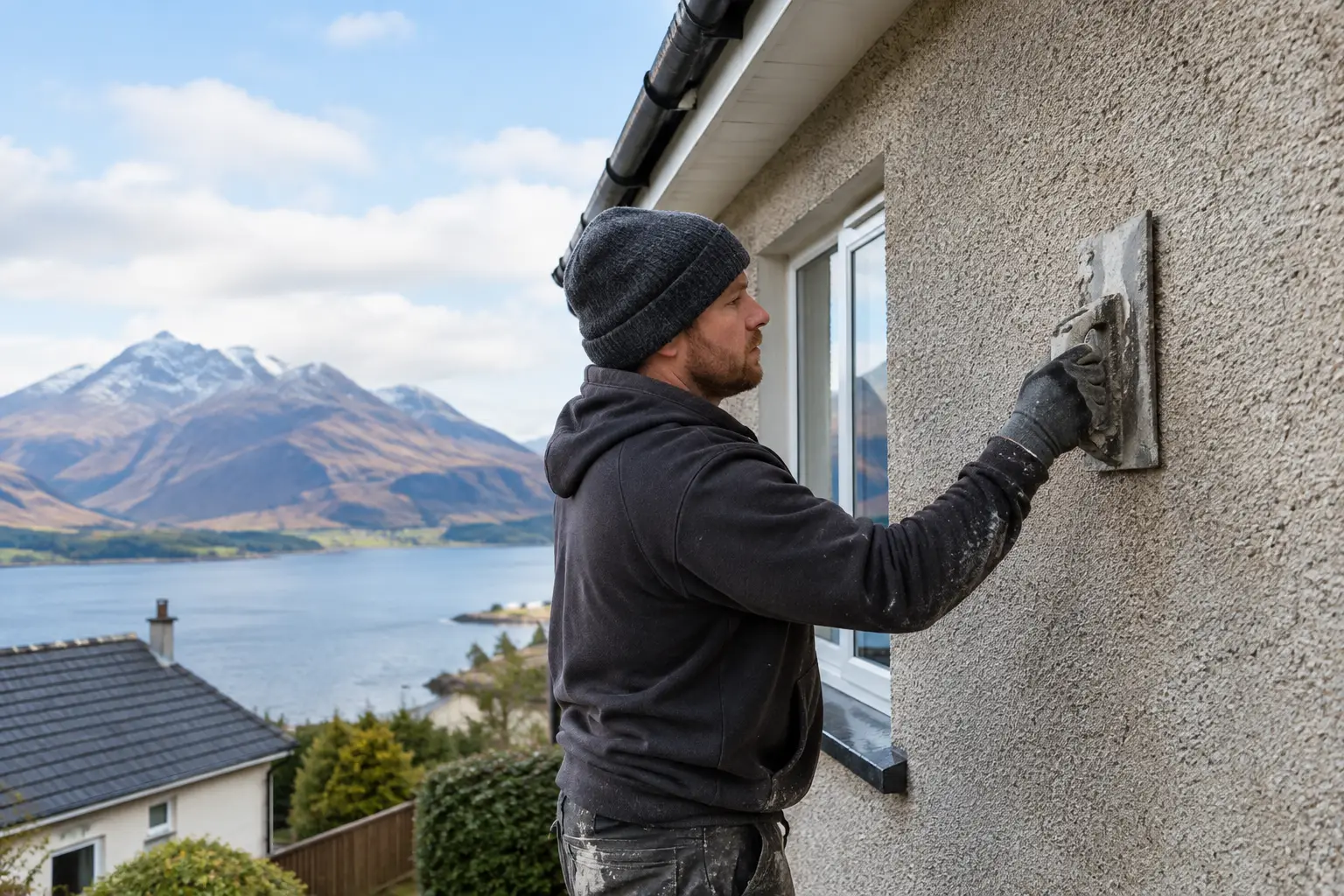
Is roughcasting worth it? See how this durable exterior finish protects Scottish homes, what affects the cost, and whether repair is enough for you...

A chimney stack is one of the most exposed parts of any property. It sits above the roofline, takes the full force of rain, wind and frost, and is often overlooked until a damp patch appears indoors or a piece of mortar lands in the gutter. Knowing how to protect chimney stack masonry and flashing can prevent small defects becoming expensive roof repairs.
In Central Scotland, repeated wet weather and freeze-thaw conditions are particularly hard on older chimneys. Water works its way into small cracks in mortar, brickwork and pointing. When temperatures drop, that trapped water expands, gradually loosening the structure. The right protection is not one product or one quick repair. It is a combination of sound masonry, effective leadwork, clear drainage and regular inspection.
A chimney should be checked from ground level at least twice a year, ideally after winter and after periods of severe weather. Binoculars can help you spot obvious changes without climbing onto the roof. Look for missing or cracked mortar, loose bricks, staining on the chimney breast, damaged flashing, or a pot that appears to be leaning.
Inside the loft, check around the chimney breast for damp timber, water marks, a musty smell or insulation that feels wet. These signs do not always mean the chimney itself is at fault. A roof tile, ridge tile or valley nearby may be letting in water. However, the location of the damp often gives a useful first indication.
Avoid walking on a roof or leaning a ladder against a chimney stack to investigate further. Chimney masonry can be less stable than it looks, and roof access carries obvious risks. A professional roofer can inspect the stack safely and identify whether the problem is cosmetic, urgent or likely to worsen over time.
Pointing is the mortar between bricks or stone. Once it becomes loose, cracked or washed out, rain can enter the joints and penetrate deeper into the stack. Repointing replaces failing mortar, restores the weatherproof surface and helps keep individual bricks secure.
The correct mortar matters, especially on traditional properties. Older brick and stone chimneys often need a breathable lime-based mortar rather than a hard modern cement mix. A mortar that is too strong can trap moisture in the masonry and cause the brick faces to break down. The best approach depends on the age and construction of the chimney, so it is worth having this assessed rather than simply filling gaps with whatever is available.
Spalled bricks, where the face has flaked or crumbled away, should be replaced before the damage spreads. Surface sealants are sometimes suggested as a shortcut, but they are not suitable for every stack. A chimney needs to shed rain while still allowing moisture within the masonry to evaporate. Applying an unsuitable waterproof coating can trap moisture and make frost damage worse.
If the stack is rendered or roughcast, inspect the finish for cracks, hollow areas and separation around the edges. Small cracks can admit a surprising amount of water. Repairing them early is usually far more straightforward than removing failed render and rebuilding damaged masonry underneath.
Hairline cracking may not look urgent in dry weather, but it is an open route for water. Once rain gets into a crack, frost can widen it quickly. Loose mortar around the top courses, cracked coping stones and failed render should be dealt with before the coldest months where possible.
This is particularly relevant for landlords and property managers. A regular external maintenance check between tenancies or before winter can protect the building and reduce the risk of an unexpected call-out during bad weather.
The chimney pot, flaunching and chimney cowl all have separate jobs. The pot allows smoke and gases to leave safely. The flaunching is the mortar bedding around the base of the pot. A cowl can help reduce rain entry, deter birds and improve protection against downdraughts in suitable situations.
Flaunching commonly fails because it is directly exposed to the elements. If it is cracked, loose or missing in places, water can enter around the pot and work into the top of the stack. Renewing failed flaunching creates a sound, sloping finish that throws water away from the pot rather than allowing it to sit on the masonry.
A chimney cowl can be worthwhile, but it is not a universal answer. The correct type depends on whether the flue serves a working fire, stove, boiler or ventilation route. A poorly chosen or incorrectly fitted cowl may restrict the flue or create draught problems. Any work on an active flue should take account of appliance safety and proper ventilation.
Unused chimneys also need consideration. Simply blocking the pot completely can trap condensation inside the flue. In many cases, a ventilated cap or suitable cowl is a better option because it keeps out most rain and debris while allowing airflow.
Even a well-built chimney will leak if the flashing around its base has failed. Lead flashing forms the weatherproof connection between the chimney and roof covering. Soakers are smaller pieces of lead, usually hidden alongside tiles or slates, which direct water safely down the roof.
Common flashing problems include lifted edges, splits, loose mortar in the chase where lead enters the brickwork, and patches of failed sealant. Sealant may offer a short-term fix in limited cases, but it should not be used to disguise defective leadwork. Properly installed lead needs correct laps, secure fixings and an appropriate chase in the masonry to cope with movement and weather.
Water stains around the chimney breast are often blamed on the stack itself when the actual cause is flashing. Equally, new flashing will not solve water penetration through badly deteriorated brickwork. A full inspection is valuable because the repair needs to address the true entry point, not just the visible symptom.
A blocked gutter does not usually damage a chimney directly, but overflowing water can soak the roof edge, saturate nearby masonry and find routes into weak areas. Moss, leaves and debris can also hold moisture against roof coverings and prevent rainwater from draining as it should.
Keep gutters, valleys and downpipes clear, especially where trees overhang the property. Check that gutter brackets are secure and that water is not spilling back against fascia boards or walls during heavy rain. If a chimney is close to a roof valley, that area deserves extra attention because it handles a large volume of water.
Some chimney faults can wait for a planned repair. Others should be checked quickly, particularly after high winds. Arrange a professional inspection if you notice any of the following:
If there is a risk of falling masonry, keep people away from the area beneath the chimney and do not attempt a repair from a ladder. This is a safety issue as well as a weatherproofing issue.
Repointing and lead repairs are often enough where the chimney is fundamentally sound. However, extensive frost damage, widespread loose brickwork, a severe lean or a stack that is no longer serving a flue may call for more substantial work.
Partial rebuilding can replace only the damaged upper courses while retaining the sound lower section. This is often a sensible balance between cost and long-term protection. Where an unused chimney is beyond economic repair, reducing it below roof level and making the roof weather-tight may be considered. The right choice depends on the chimney’s condition, the property’s appearance, future plans for fireplaces or stoves, and any planning or conservation requirements.
A clear written assessment should explain what has failed, what work is recommended and why. Homeowners should be wary of anyone proposing major chimney work without close inspection, photographs or a straightforward explanation of the options.
The most effective maintenance plan is simple: inspect the stack regularly, repair defects while they are small, and do not ignore staining or loose mortar because the roof is otherwise performing well. Quality chimney work should leave the masonry secure, the top properly finished, and the leadwork shaped to move water away from vulnerable joints.
For properties in Falkirk and across Central Scotland, a local roofing specialist can assess chimney condition alongside the surrounding roof, gutters and leadwork. Forth Valley Roofing provides practical advice, clear quotations and insured workmanship for chimney repairs where a professional inspection is needed.
A chimney does not need to look perfect to be protected, but it does need to be stable, properly pointed and able to shed water. Acting when the first small defect appears gives you more repair options, less disruption and a better chance of keeping the rest of the roof dry through the next spell of hard weather.
Is roughcasting worth it? See how this durable exterior finish protects Scottish homes, what affects the cost, and whether repair is enough for you...

See a gutter replacement project example, from the first inspection to fitting new gutters, and learn what protects a Central Scotland home in winter.

Does roof ventilation reduce condensation? Learn when roof vents help, what causes loft moisture and how to protect your Central Scotland home this winter.