

October 10, 2026
A practical roughcast maintenance guide Scotland homeowners can use to spot damp, cracks and weather damage before repairs become more costly over winter.

A damp patch on the ceiling near a chimney breast usually tells you the same story – water is getting past the flashing. If you are wondering how to repair chimney flashing, the first thing to understand is that the visible stain indoors is often only the end result. The real problem sits where the chimney meets the roof, and small failures there can let in a surprising amount of water.
Chimney flashing is designed to seal that junction and direct rain safely away. In Scotland, where wind-driven rain and repeated freeze-thaw cycles are part of normal life, that area takes a lot of punishment. A repair can be simple in some cases, but only if the damage is caught early and the right method is used.
Flashing is the weatherproof barrier fitted around the base of the chimney where it passes through the roof. On most pitched roofs, that will include step flashing along the sides, apron flashing at the front, and back gutter or soaker details at the rear, often combined with lead. Mortar pointing or lead wedges hold parts of the flashing into the chimney joints.
When everything is sound, rainwater runs down the roof and around the chimney without finding a route inside. When flashing lifts, splits, cracks, slips, or pulls away from the brickwork, water starts to track into the roof structure. That can lead to stained ceilings, rotten battens, damaged insulation, and internal plaster issues.
The clearest sign is a leak around the chimney area, especially after heavy rain. You might also notice damp in the loft, discoloured patches on upstairs ceilings, peeling wallpaper near the chimney breast, or bits of mortar on the roof or in the guttering.
From outside, lead flashing may look loose, cracked, poorly dressed, or visibly detached from the chimney. In older properties, the issue is sometimes not the lead itself but the mortar chase holding it in place. If that has cracked or worn away, water can get behind the flashing even when the metal still looks usable.
It is also worth checking whether the leak is definitely flashing-related. Chimney pots, flaunching, brickwork, chimney pointing, nearby slates, and ridge details can all let in water. Misdiagnosis is common, which is why a proper roof-level inspection matters.
The exact repair depends on what has failed. There is no single fix that suits every chimney.
If the flashing has lifted slightly but is otherwise in good condition, the repair may involve re-securing it into the mortar joint, applying fresh lead sealant where appropriate, and repointing the chase. If the mortar has perished, cutting out loose material and renewing the pointing can often restore the watertight seal.
If sections of lead are split, badly corroded, or too short to do the job properly, patching is rarely the best long-term answer. In that case, the damaged sections usually need to be replaced. That might mean fitting new step flashing, apron flashing, or a full lead flashing system around the stack.
Sometimes the repair extends beyond the flashing itself. Slates or tiles around the chimney may need to be lifted and refitted, underlay may need checked, and timber beneath may need attention if water has been getting in for a while. A good repair deals with the cause, not just the visible symptom.
Sometimes yes, sometimes no. That depends on the age of the flashing, the material used, and the quality of the original installation.
Lead flashing can last for many years when fitted correctly, so if the metal is still sound, a targeted repair may be perfectly reasonable. Repointing, re-dressing loose lead, or replacing a small failed section can all work well where the rest of the detail is in serviceable condition.
If the flashing has already been patched several times, if the lead has split due to movement or poor fixing, or if the detail was installed badly from the start, repair becomes less cost-effective. In those cases, replacement is often the more sensible option because it avoids repeat callouts and ongoing water damage.
Homeowners often look up how to repair chimney flashing after spotting a leak and hoping for a quick fix. That is understandable, but working around a chimney on a pitched roof is not the same as replacing a tile at ground-floor level. Access is awkward, surfaces are slippery, and the repair needs to cope with wind and rain for years, not just a weekend.
The other risk is using the wrong material. Roofing mastic, general-purpose sealants, and surface coatings are often treated as easy answers, but they tend to fail quickly when exposed to weather and movement. A smear of sealant over a flashing gap might slow a leak briefly, but it does not replace correctly installed leadwork.
There is also the issue of hidden defects. What looks like a small opening at the front apron may actually involve failed side flashing, cracked mortar joints, or rotten battens below. Without lifting and checking the surrounding area properly, it is easy to repair the wrong thing.
A lasting chimney flashing repair starts with safe access and a close inspection of the chimney base, surrounding roof covering, mortar joints, and lead condition. Any loose or failed material should be removed rather than covered over.
If the lead is being reused, it should be cleaned, resecured, and dressed properly to sit tightly against the roof covering without unnecessary stress points. If new lead is needed, it should be fitted in suitable lengths with the correct laps and fixings so expansion and contraction do not cause splitting later on.
The chase in the chimney should then be pointed or sealed with an appropriate product designed for roofing applications. Finally, the surrounding slates or tiles should be made good and the area tested visually to make sure water will drain cleanly away.
Age is one factor, but it is not the only one. Poor workmanship is a major cause of chimney leaks. Flashing that is too shallow, badly cut into the mortar joint, over-reliant on sealant, or not lapped correctly will struggle in bad weather.
Movement also plays a part. Chimneys and roofs expand and contract at different rates, and over time that can stress joints and fixings. Strong winds can loosen already weak sections, while frost can open up cracks in mortar and allow more water behind the lead.
In some cases, the flashing itself is blamed when the chimney stack really needs broader repair work. Loose pointing, damaged flaunching, porous brickwork, or missing pots can all contribute to leaks around the same area.
If the problem is localised and the rest of the flashing is sound, repair is often enough. That is usually the most cost-effective route and avoids unnecessary disturbance to the roof.
Replacement makes more sense where the flashing is nearing the end of its life, has multiple failed sections, or was fitted to a poor standard. It is also worth considering if you are already carrying out nearby roof repairs, as combining jobs can be more practical and often better value.
For landlords and property managers, there is another consideration: repeat leaks cost more than proper repairs. A cheaper short-term patch can end up meaning another visit, more tenant disruption, and further internal damage if the weather turns before the issue is fully resolved.
For most properties, chimney flashing repair is best handled by an experienced roofer with leadwork knowledge. The detail matters. A tidy-looking patch is not the same as a watertight repair that will stand up to Scottish weather.
A reliable contractor should explain whether the flashing can be repaired or needs replaced, what caused the failure, and whether any surrounding roof materials have been affected. Clear advice matters just as much as the repair itself, especially if you have already had a leak and want confidence that the issue has been properly dealt with.
At Forth Valley Roofing, this is exactly the kind of work we are called out to across Central Scotland – practical chimney and roof repairs that stop water getting in and prevent small defects turning into bigger ones.
If you have spotted staining near a chimney breast, damp in the loft, or visible damage around the base of the stack, it is worth getting it checked before the next spell of heavy rain. Chimney flashing problems rarely improve on their own, but with the right repair, they can be put right before they lead to much more expensive damage.
A practical roughcast maintenance guide Scotland homeowners can use to spot damp, cracks and weather damage before repairs become more costly over winter.

Learn how to assess heritage slate roofs, plan sympathetic repairs and protect a Central Scotland property from leaks, storm damage and costly disruption.
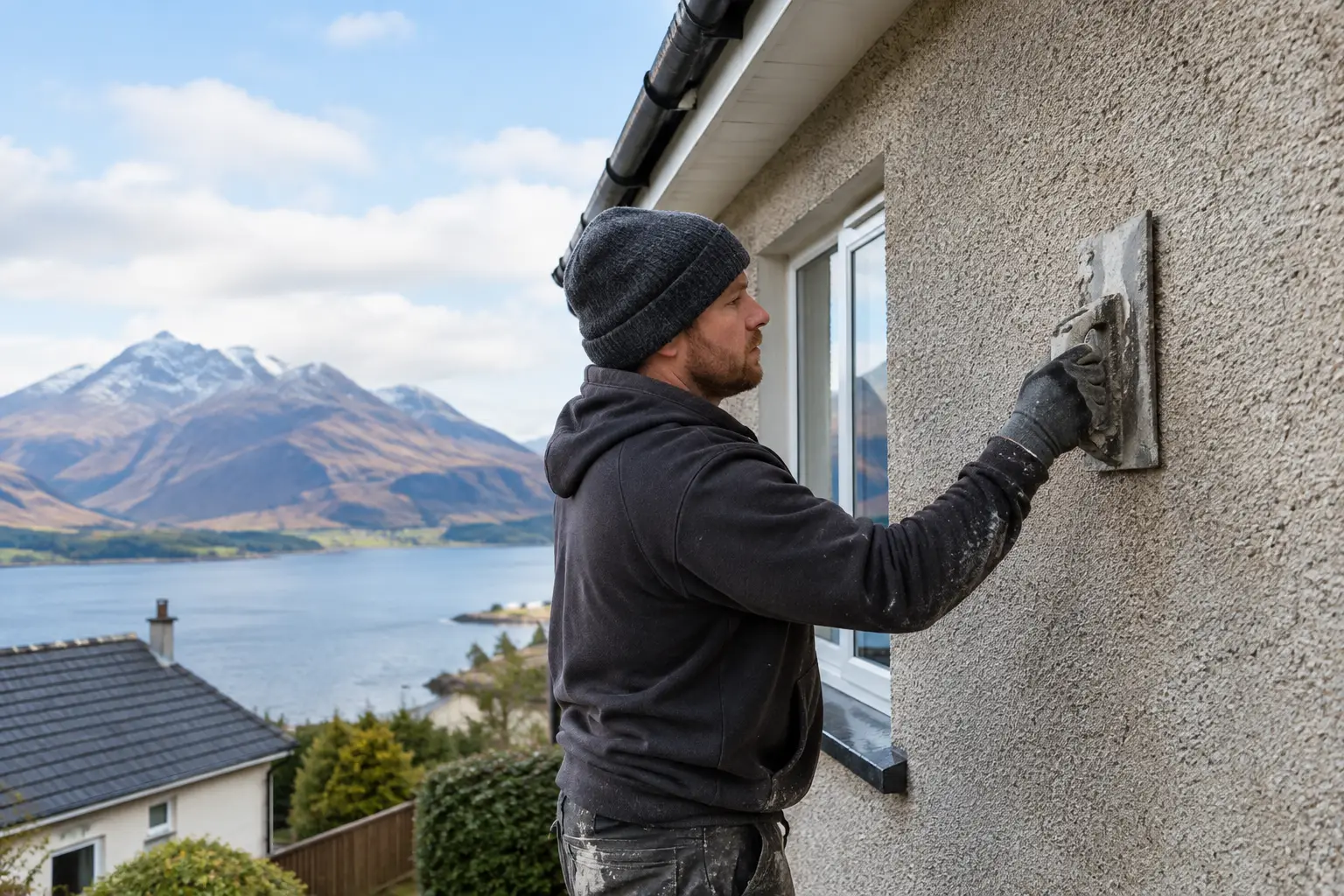
Is roughcasting worth it? See how this durable exterior finish protects Scottish homes, what affects the cost, and whether repair is enough for you...