

October 10, 2026
A practical roughcast maintenance guide Scotland homeowners can use to spot damp, cracks and weather damage before repairs become more costly over winter.

A leaking commercial roof rarely starts as a dramatic failure. More often, it begins with a split seam, a blocked outlet, loose flashing or standing water that goes unnoticed until it reaches insulation, ceilings and electrics. That is why a commercial roofing maintenance plan matters. It gives property owners and managers a clear way to spot small defects early, control repair costs and keep the roof working as it should.
For commercial buildings, the roof is not just another part of the structure. It protects stock, tenants, staff, equipment and day-to-day operations. If it fails, the cost is rarely limited to the roofing repair itself. There can be disruption to trading, health and safety concerns, damage to interiors and pressure to act quickly, often in poor weather. Planned maintenance is usually far cheaper than emergency response.
A proper commercial roofing maintenance plan is more than a reminder to look at the roof now and then. It should set out when inspections happen, what is checked, how defects are recorded and when repairs are carried out. It should also reflect the roof type, the age of the building and how the site is used.
Flat roofs usually need closer attention because drainage, membrane condition and detailing around penetrations all play a big part in performance. Pitched commercial roofs bring different concerns, including slipped coverings, failing mortar work, damaged ridges and issues around valleys or leadwork. The plan should fit the roof that is actually on the building rather than using a generic checklist.
In most cases, two scheduled inspections a year is a sensible starting point, often in spring and autumn. That catches damage after winter weather and prepares the roof before colder conditions return. Extra inspections are also worth arranging after storms, heavy winds or any building work that may have affected the roof surface.
Many building owners delay maintenance because the roof seems fine from ground level. The problem is that roofing defects are often hidden until water finds a path inside. By that point, the repair may involve wet insulation, internal redecoration, replacement ceiling tiles or disruption to tenants.
A planned approach keeps costs more predictable. Instead of waiting for a failure and dealing with whatever turns up, you are dealing with manageable repairs at the right time. A cracked detail, isolated blistering or a blocked hopper can usually be dealt with quickly if found early. Left alone, those same issues can shorten the life of the full roof system.
There is also the question of asset life. Commercial roofs are a major investment. If a maintenance plan adds several years of service before replacement is needed, the value is obvious. That matters even more for landlords and property managers balancing budgets across multiple sites.
A roof inspection should be practical and methodical. The aim is not simply to say the roof has been seen, but to identify the areas most likely to fail and deal with them before they become urgent.
Membranes and roof coverings should be checked for splits, punctures, blisters, shrinkage and open laps. Flashings around walls, rooflights, vents and plant supports need close attention because these details often fail before the main field area does. On pitched roofs, slipped tiles, cracked slates and defective ridge or verge details can all allow water in.
Drainage is another common weak point. Gutters, outlets, valleys and downpipes should be kept clear so water can leave the roof properly. Standing water on a flat roof is not always a crisis, but it should never be ignored. Sometimes the issue is blocked drainage. Sometimes it points to falls that have changed, deflected decking or long-term wear.
The inspection should also consider signs of movement, corrosion, failed sealants and damage caused by foot traffic. Commercial roofs often carry plant, ductwork or access routes for other trades. If people are regularly walking on the roof, that changes the maintenance needs. Protective walkways or stricter access control may be needed as part of the plan.
There is no single answer that suits every building. A newer roof on a simple, low-risk site may need less intervention than an older roof with multiple penetrations, rooftop equipment and a history of leaks. The right schedule depends on age, construction, exposure and use.
For many properties, twice-yearly inspections with reactive repairs in between are enough. Some buildings need quarterly visits, especially where there are drainage issues, heavy tree debris, frequent rooftop access or vulnerable detailing. If the property sits in an exposed location where wind and rain regularly test the roof, it makes sense to inspect more often.
This is where local knowledge helps. In Central Scotland, roofs have to cope with strong winds, prolonged rain and sharp temperature changes through the year. That can be hard on flat roof systems, flashings and rainwater goods. A maintenance plan should reflect those conditions instead of assuming a mild climate and low exposure.
One of the most useful parts of a commercial roofing maintenance plan is the paper trail. Inspection notes, dated photographs, repair records and observations over time help build a clear picture of how the roof is performing.
That record is useful for budgeting because it shows whether defects are isolated or recurring. It also helps if ownership changes, if tenants report an issue or if an insurer wants evidence that the building has been properly maintained. In some cases, it can support warranty compliance, though terms vary and should always be checked against the specific roofing system.
Good records also stop the same areas being patched again and again without asking whether a more permanent repair is due. Repeated small repairs can make sense for a while, but there comes a point where ongoing spend starts to rival the cost of a larger planned solution. Without records, that threshold is easy to miss.
The biggest mistake is treating maintenance as purely reactive. If the roof is only inspected after a leak appears, the plan is already failing. The second common problem is using a one-size-fits-all approach. Different roof systems age differently and fail in different ways.
Another issue is allowing other trades onto the roof without controls. Engineers servicing plant, satellite contractors and general maintenance teams can all accidentally damage membranes, flashings or edge details. If roof access is frequent, that should be acknowledged within the maintenance plan rather than treated as an afterthought.
Cheap patch repairs can also become a false economy. There are times when a quick repair is entirely sensible, especially to make the roof safe and watertight. But if materials are incompatible, if drainage defects are ignored or if the underlying substrate is already compromised, the patch may only buy a short period of relief.
A maintenance plan can extend roof life, but it cannot solve every problem indefinitely. If the roof has widespread wet insulation, repeated leaks across multiple areas, advanced membrane failure or structural concerns, a more substantial repair or replacement may be the better route.
That does not mean maintenance was pointless. Quite the opposite. A good maintenance history helps identify the point where repair stops being cost-effective. It gives you evidence for a planned capital decision rather than forcing you into an emergency replacement after a major failure.
For property managers, this is often the real benefit. Good maintenance does not just reduce leaks. It gives you better timing, clearer budgeting and fewer nasty surprises.
The right contractor should be clear, practical and honest about what the roof needs now versus what may be needed later. You want proper reporting, consistent communication and repairs that match the roof system rather than generic fixes.
It also helps to work with a company that understands both urgent response and planned maintenance. Commercial roofs do not always fail on a tidy schedule. If a problem appears between inspections, you need a contractor who can respond quickly and then fold that repair back into the wider maintenance picture.
For businesses and property owners in Falkirk and the wider Central Scotland area, a local roofing contractor with experience across flat roofs, leadwork, gutters and commercial repairs can make the process far more straightforward. If you are building a maintenance plan from scratch, start with an honest roof inspection, a realistic schedule and clear records. A roof looked after properly tends to give far less trouble, and that is exactly what most commercial properties need.
A practical roughcast maintenance guide Scotland homeowners can use to spot damp, cracks and weather damage before repairs become more costly over winter.

Learn how to assess heritage slate roofs, plan sympathetic repairs and protect a Central Scotland property from leaks, storm damage and costly disruption.
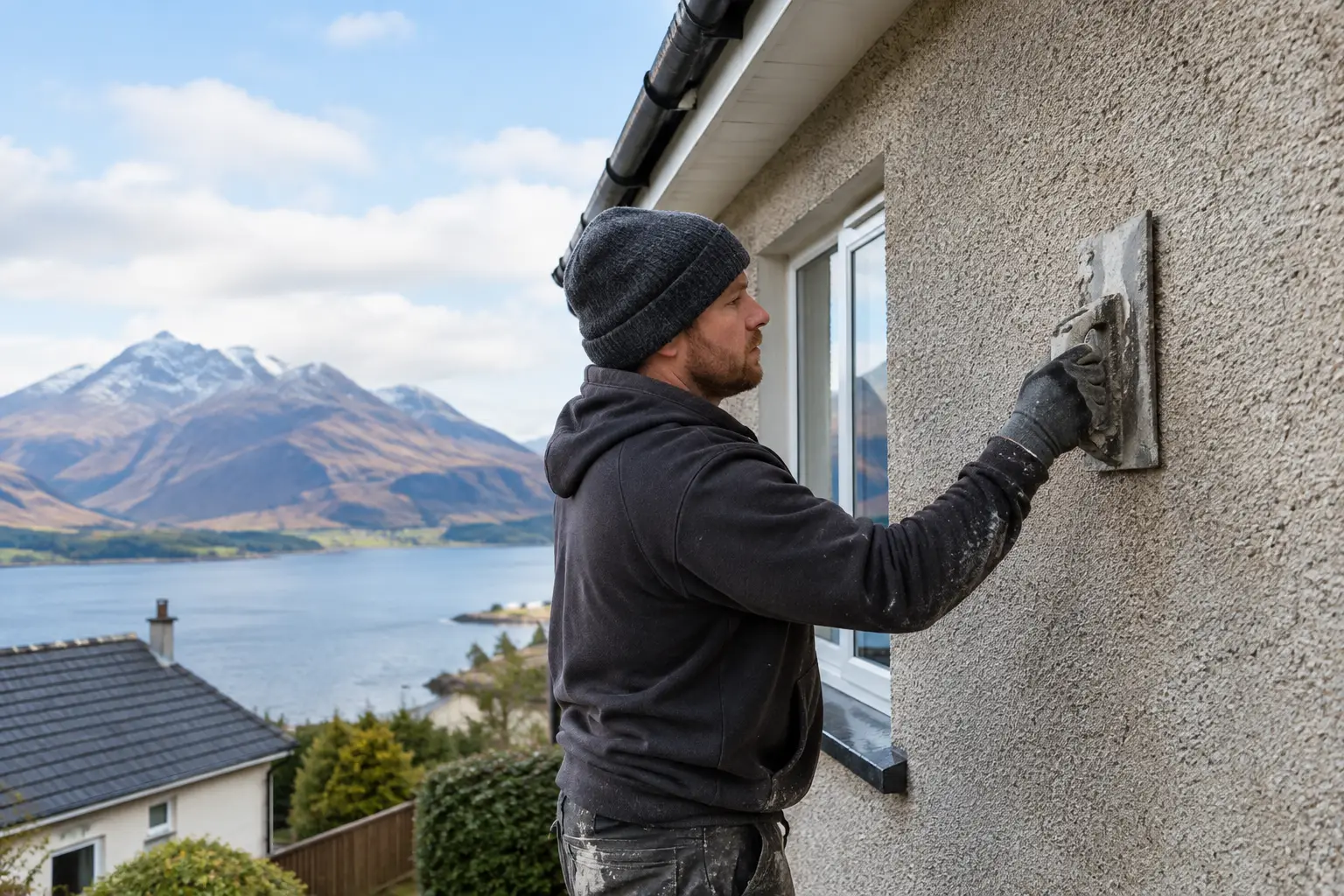
Is roughcasting worth it? See how this durable exterior finish protects Scottish homes, what affects the cost, and whether repair is enough for you...