

October 10, 2026
A practical roughcast maintenance guide Scotland homeowners can use to spot damp, cracks and weather damage before repairs become more costly over winter.

A ceiling stain spreading after heavy rain, slates on the ground, or water entering a loft is not the time for vague promises. The best emergency roofer questions help you establish whether a contractor can make your property safe, explain the likely work clearly, and give you a fair route to a lasting repair.
A genuine emergency roofer should not expect you to understand roofing terms before calling. They should ask sensible questions about the damage, give safe immediate advice, and be honest about what can be done in bad weather. In Central Scotland, wind-driven rain and sudden storms can turn a small defect around flashing, tiles, gutters or flat roofing into an urgent problem very quickly.
Before discussing price, make the area as safe as possible from ground level. Move belongings away from the leak, place a container beneath dripping water and, if water is close to lights or wiring, avoid touching electrical fittings and switch off the affected circuit only if it is safe to do so.
Do not climb onto the roof, use a ladder in strong winds, or attempt to refit loose slates yourself. A roof can be far more unstable than it appears, particularly after storm damage. Clear photographs from a safe position can be useful, but they are not worth taking risks for.
When you speak to a roofer, explain where the water is appearing, whether it started during wind or rain, and whether you can see missing materials or damage from outside. This gives them a better chance of arriving prepared. It does not replace an inspection, but it helps establish the urgency.
The right questions are not about catching a contractor out. They are about making sure everyone is clear on safety, scope and next steps while your property is vulnerable.
Ask for a realistic arrival window rather than accepting a simple promise to come “as soon as possible”. A responsible roofer will explain if high winds, lightning or unsafe roof conditions prevent immediate access. That is not poor service. It is the difference between an emergency response and taking an unnecessary risk.
Even where a full repair cannot be carried out straight away, a roofer may be able to assess from safe access, install temporary protection when conditions allow, or arrange a priority return visit. Ask what the first attendance is intended to achieve: inspection, making safe, temporary covering, or repair.
Roof work involves working at height, access equipment and the risk of hidden damage beneath the surface. Ask whether the contractor holds appropriate insurance and whether their team is covered for the work they are undertaking. A reputable local roofer should answer plainly.
Insurance does not guarantee that every issue will be covered by your household policy, but it is a basic sign that the contractor takes their responsibilities seriously. If the damage may lead to an insurance claim, ask for clear paperwork and photographs of the identified damage where appropriate.
A visible drip is rarely the whole story. Water can travel along roof timbers, felt, insulation or pipework before appearing on a ceiling. Missing tiles may be the obvious problem, but failed lead flashing, cracked mortar, damaged valleys, blocked gutters, chimney defects or a split in a flat roof covering can also be responsible.
Ask what the roofer can confirm during the first inspection and what remains uncertain until the area is opened up. An honest answer may be that the exact source cannot be confirmed until the roof is dry or safe to inspect closely. Be cautious of anyone who gives a definite diagnosis from a brief glance at the ground.
Temporary work has a valuable place in an emergency. It can stop further water ingress, protect the building and give you time to plan properly. However, it is not always a permanent answer, especially where roofing felt, battens, flashing or the roof covering beneath the damaged section has deteriorated.
Ask the contractor to separate the immediate make-safe work from any recommended follow-on repair. You should understand what the temporary measure is expected to do, how long it may last, and what conditions could cause it to fail. This is particularly relevant for flat roofs, where a patch may be sensible for a small isolated split but not for widespread ageing or ponding water.
An emergency call-out may involve attendance, assessment, labour, access, materials and temporary weather protection. Ask whether the stated price covers all of these or whether any items are provisional. If scaffolding, a cherry picker or specialist access is needed, that can affect cost and timing.
The cheapest figure is not always the best value if it leaves you unclear about what has been done or what happens next. Ask for the work to be described in writing, even if the first job is limited to making the roof safe. A clear scope reduces the chance of misunderstandings once the immediate pressure has passed.
Most homeowners cannot safely inspect a roof themselves. Before-and-after photographs are therefore a practical way to understand the issue, particularly on chimneys, valleys, flat roofs and high-level tile damage. They can also be useful if you need to speak with an insurer, landlord or property manager.
Photographs should support an explanation, not replace one. Ask the roofer to explain what you are seeing in plain language: where the defect is, why it has caused the problem and what has been repaired or protected.
For a small repair, the priority is weatherproofing and secure fixing. Matching slates, tiles or roof finishes closely is also worthwhile where possible, particularly on visible elevations. Availability can be a factor after a major storm, so ask whether a close match is available now or whether the final replacement may need to be scheduled.
With lead work, flashing repairs and flat roofing systems, ask what material is proposed and why it suits the existing roof. A good roofer will recommend a practical option based on the roof’s condition, drainage and expected lifespan rather than forcing one solution onto every job.
Storm damage can affect more than the covering. Loose ridge tiles, damaged chimney pointing, failing gutters, torn fascia boards and displaced flashing may all contribute to further leaks or falling debris. Ask whether the inspection has identified adjoining areas that need attention.
This does not mean every nearby defect needs urgent replacement. The roofer should distinguish between immediate safety issues, repairs that should be completed soon, and maintenance that can be planned for later. That distinction is especially useful for landlords and property managers balancing several maintenance priorities.
Ask what guarantee applies to both materials and workmanship, and request confirmation of the terms. A guarantee should relate to the specific work completed rather than being used as a vague reassurance. Its length may differ between a simple tile repair, new flashing, gutter work and a larger replacement roof section.
Forth Valley Roofing provides insured workmanship and a 5-year guarantee on qualifying work, giving customers a clear point of reference after the job is complete. Whatever contractor you choose, make sure you know who to contact if the repaired area needs to be reviewed.
A well-handled emergency is not just about the first visit. If a temporary repair is installed, ask when the roofer will return to complete permanent work, whether dry weather is required, and how you will receive the quote or findings. Good communication matters when a repair has to be staged over several days.
There are times when you should treat roof damage as urgent even if the leak looks small. Water near electrics, a visibly sagging ceiling, tiles or masonry falling from height, a loose chimney element, or a large section of damaged flat roof all need prompt professional attention. Keep people away from the affected area and do not leave vehicles beneath loose roof materials.
For less immediate concerns, such as occasional damp patches, moss buildup or overflowing gutters, arranging an inspection before the next period of severe weather can prevent a much more expensive call-out later.
The best emergency roofer will not pressure you into a full replacement during a stressful moment. They will make the property safe, explain what they have found, set out the realistic options and leave you with enough information to decide confidently. When rain is getting in, clear answers are every bit as valuable as a quick response.
A practical roughcast maintenance guide Scotland homeowners can use to spot damp, cracks and weather damage before repairs become more costly over winter.
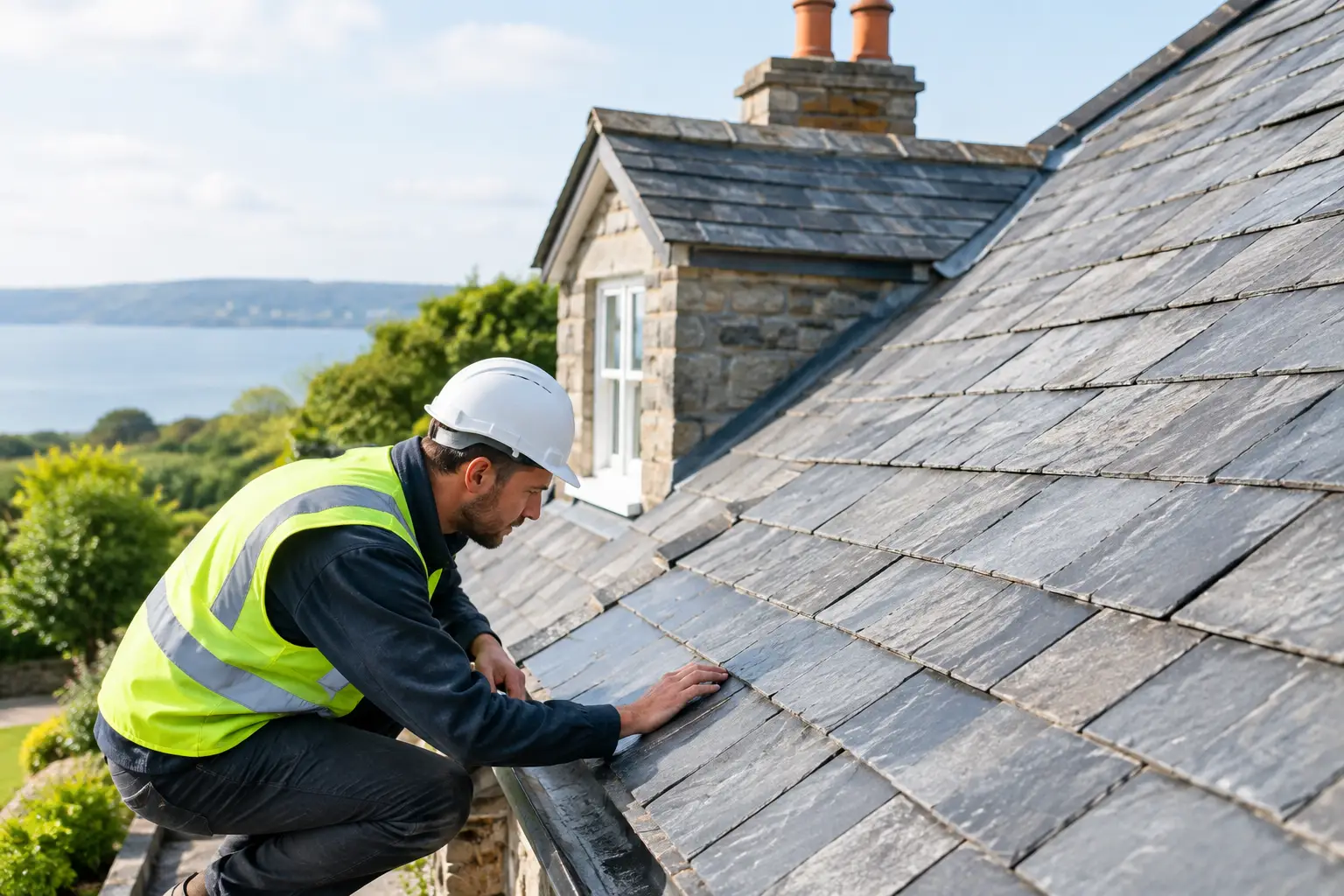
Learn how to assess heritage slate roofs, plan sympathetic repairs and protect a Central Scotland property from leaks, storm damage and costly disruption.
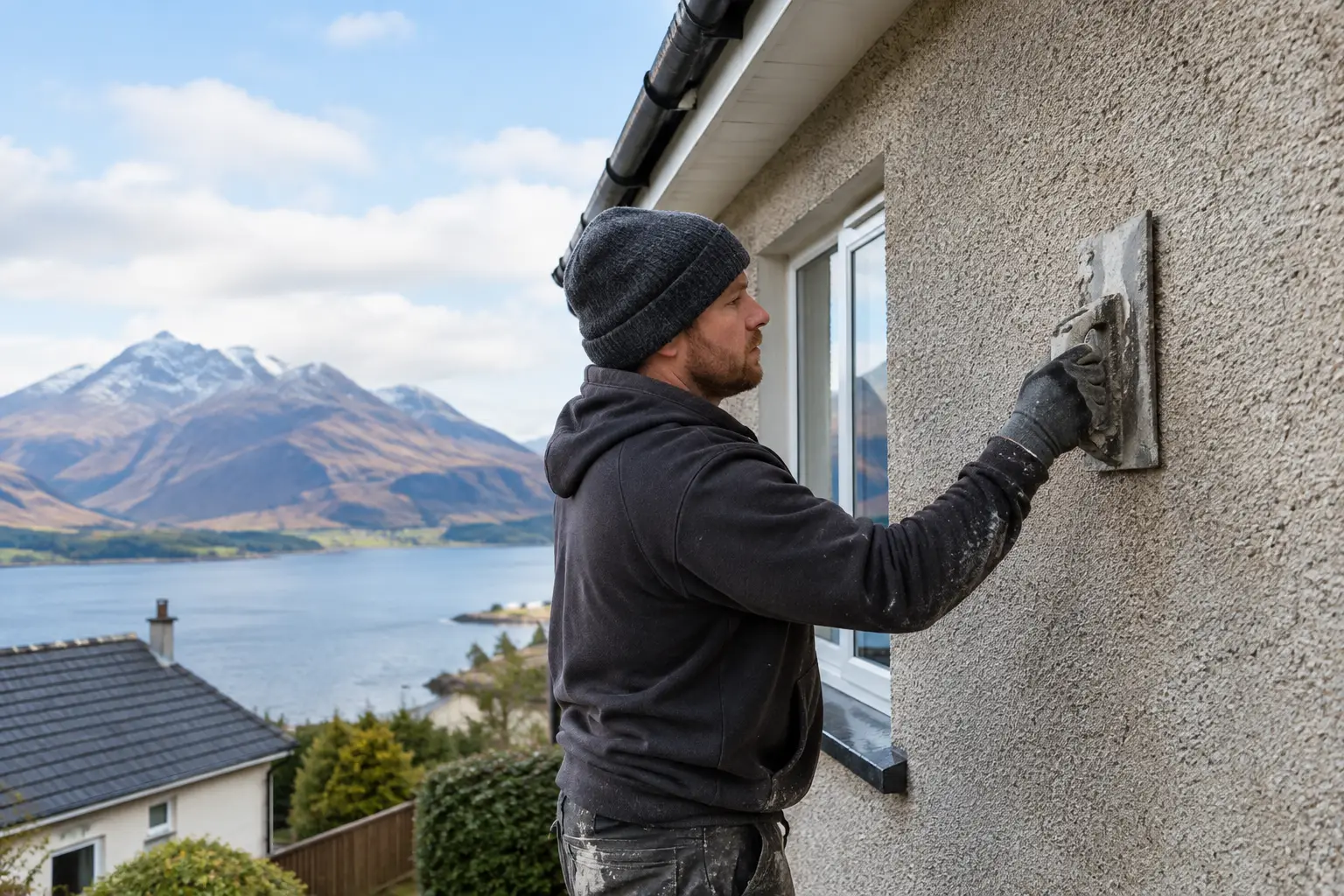
Is roughcasting worth it? See how this durable exterior finish protects Scottish homes, what affects the cost, and whether repair is enough for you...