

October 10, 2026
A practical roughcast maintenance guide Scotland homeowners can use to spot damp, cracks and weather damage before repairs become more costly over winter.

A roof in Central Scotland has to cope with far more than the occasional shower. Persistent rain, high winds, freeze-thaw cycles and damp conditions all test the tiles, coverings, flashings and drainage. That is why sustainable roofing options Scotland homeowners choose should not be judged on materials alone. A genuinely sustainable roof is one that lasts, keeps heat in, manages water properly and can be maintained rather than needlessly replaced.
For many properties, the greenest decision is not a full replacement. Repairing a sound roof, renewing damaged leadwork, replacing failed gutters or improving insulation can protect the building while avoiding the waste and cost of an unnecessary new installation. Where a replacement is needed, the right choice depends on the age of the property, roof pitch, exposure to weather, budget and long-term plans for the home.
Sustainability in roofing is often reduced to whether a material is natural or recycled. That matters, but it is only part of the picture. A heavy roof covering that lasts for a century can have a lower lifetime impact than a cheaper product replaced several times. Likewise, a new roof with poor ventilation or inadequate insulation may waste energy and develop condensation problems, whatever its surface material.
A sensible assessment looks at service life, repairability, recycled content, transport, insulation performance and how much waste the work creates. It should also consider whether the roof is suitable for solar panels now or in future.
In Scotland, weather resistance is not separate from sustainability. A covering that struggles with wind-driven rain, lifts at the edges or requires frequent patching is unlikely to be the responsible long-term option. Good detailing around valleys, chimneys, roof junctions and gutters is every bit as important as the main roof covering.
Slate remains one of the strongest choices for traditional Scottish homes. It suits many older properties around Falkirk, Stirling and Edinburgh, has a long working life and can often be repaired by replacing individual slates rather than stripping the entire roof. Reclaimed slate is particularly attractive where suitable material is available, as it reduces demand for newly quarried stone and helps retain the character of an older building.
It is not always the lowest-cost route. Slate is heavy, skilled fitting is essential, and matching existing slates can take care and time. The roof structure must also be capable of carrying the weight. However, for a properly maintained pitched roof, its longevity and repairability can make the upfront investment worthwhile.
New natural slate can also be a sound option when reclaimed stock is unsuitable. The key is to use a product appropriate to the roof and install it with secure fixings, quality underlay and carefully formed flashings.
Concrete tiles are widely used because they are durable, readily available and suitable for many modern homes. Some manufacturers use recycled aggregates, and tiles can offer a long service life when correctly installed. Their main drawback is weight, so the existing roof structure needs checking before changing from a lighter covering.
Clay tiles generally have a longer lifespan and their colour is baked through rather than applied as a surface coating. They can be a good fit for certain property styles, though they may cost more and are not always appropriate for every local roofscape. Both clay and concrete can be sustainable choices when they are expected to last for decades, can be repaired locally and are paired with effective insulation.
Metal roofing is becoming more common on extensions, garden rooms, commercial units and contemporary new builds. Steel and aluminium products can contain recycled material, are relatively light and can be recycled again at the end of their useful life. A well-specified metal roof also sheds water quickly, which is useful in wet conditions.
The trade-off is appearance. Metal will not suit every period property, and poor installation can lead to noise during heavy rain, movement as temperatures change or corrosion around cut edges and fixings. It needs the right insulation, ventilation and acoustic treatment beneath it. For the right project, it can be a durable, low-maintenance option rather than a universal answer.
Flat roofs need special attention because standing water, failed joints and poor drainage can shorten their life. A modern single-ply system, such as a Fatra flat roofing system, can provide a durable waterproof finish with fewer joints than older felt roofs. It is particularly practical for extensions, garages, commercial roofs and replacement flat roofs where dependable weather protection is the priority.
The sustainable value comes from getting the full build-up right: insulation at the correct level, a suitable vapour control layer, sound falls to drainage outlets and a membrane installed to the manufacturer’s specification. A new membrane over a wet or rotten deck is not a sustainable repair. The underlying problem must be addressed first.
A green roof can slow rainwater run-off, support insects and improve the outlook from upper windows. On suitable low-pitched roofs, sedum systems are generally lighter and lower maintenance than deeper planted roofs. They can be particularly useful where surface-water management is a concern.
They are not maintenance-free, and they are not suitable for every building. The roof must be designed to carry the additional saturated weight, drainage must remain accessible and the waterproofing beneath must be first-class. A green roof is best planned as part of a new flat roof or major refurbishment, rather than added as an afterthought to an ageing covering.
The most effective environmental improvement may sit below the roof covering. Heat rises, and a poorly insulated loft can make a home harder and more expensive to heat. Improving loft insulation is often straightforward, but it must not block eaves ventilation or create cold spots around the perimeter.
Ventilation allows moisture-laden air to escape. Without it, condensation can form on timbers and underlays, leading to mould, damp insulation and eventually timber decay. This is a common issue when homeowners improve insulation without considering how the roof will breathe.
For a roof replacement, it is worth reviewing insulation, ventilation and airtightness together. This gives a better result than treating each item as a separate job. It also helps ensure that the roof performs well through Scottish winters, rather than simply looking new from the street.
Solar panels are not a roof covering, but roof work is often the best time to prepare for them. If an existing roof is near the end of its life, fitting panels first can mean paying later to remove and reinstall them during a reroof. Completing essential repairs or replacement work beforehand is usually the more practical order.
A roofer should assess the condition of the rafters, covering, flashings and drainage before solar installation. The panel layout, fixing method and cable routes should be planned so they do not compromise waterproofing. South-facing roofs are often favourable, but east- and west-facing roofs can still produce useful generation depending on shading and household electricity use.
A sustainable roof needs ongoing attention. Clearing gutters, checking slipped slates after storms, keeping valleys free of debris and renewing small areas of damaged pointing can prevent a minor fault becoming widespread decay. Water running behind a fascia or into a chimney stack can cause far more waste than a timely repair.
Before approving a replacement, ask whether the roof can be repaired safely and economically, whether reusable slates or tiles can be retained, and how old materials will be handled. A clear quotation should explain the proposed covering, insulation approach, ventilation details, waste removal and any work needed to chimneys, gutters, fascias or lead flashings.
For listed buildings or homes in conservation areas, material and appearance may also be restricted. Matching the existing roof correctly is not only better for the property’s character – it can avoid problems with planning requirements and preserve materials that were designed to work with the building.
There is no single best sustainable roof for every Scottish home. Reclaimed slate may be ideal for a traditional property, while a well-insulated single-ply flat roof could be the sensible answer for an extension. A modest repair combined with loft insulation may deliver more value than replacing a roof that still has years of service left.
The right starting point is a close inspection and an honest explanation of what is urgent, what can be repaired and what should be planned for. Forth Valley Roofing can provide a clear, no-obligation assessment for homeowners who want to protect their property while making a practical long-term choice.
A practical roughcast maintenance guide Scotland homeowners can use to spot damp, cracks and weather damage before repairs become more costly over winter.
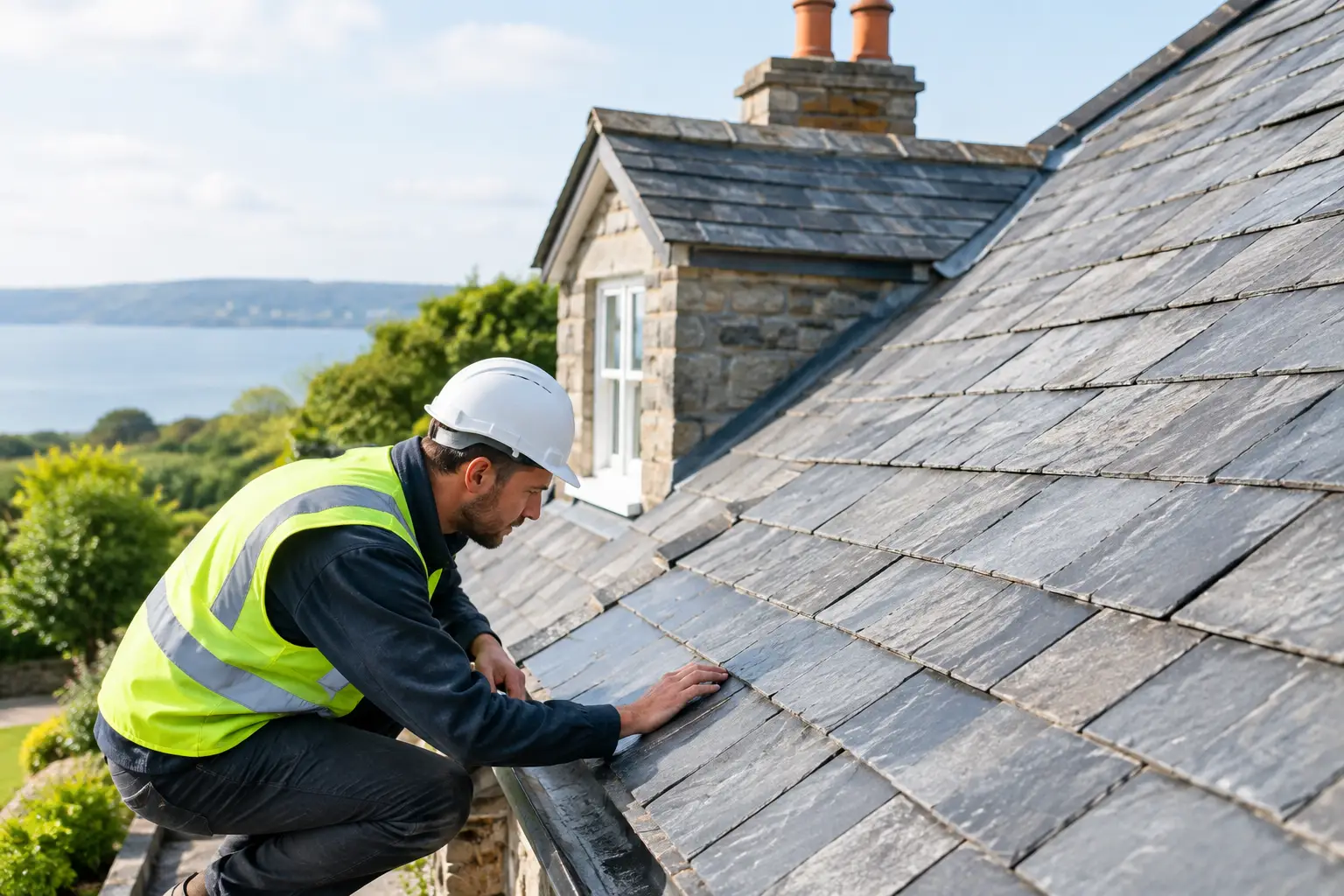
Learn how to assess heritage slate roofs, plan sympathetic repairs and protect a Central Scotland property from leaks, storm damage and costly disruption.
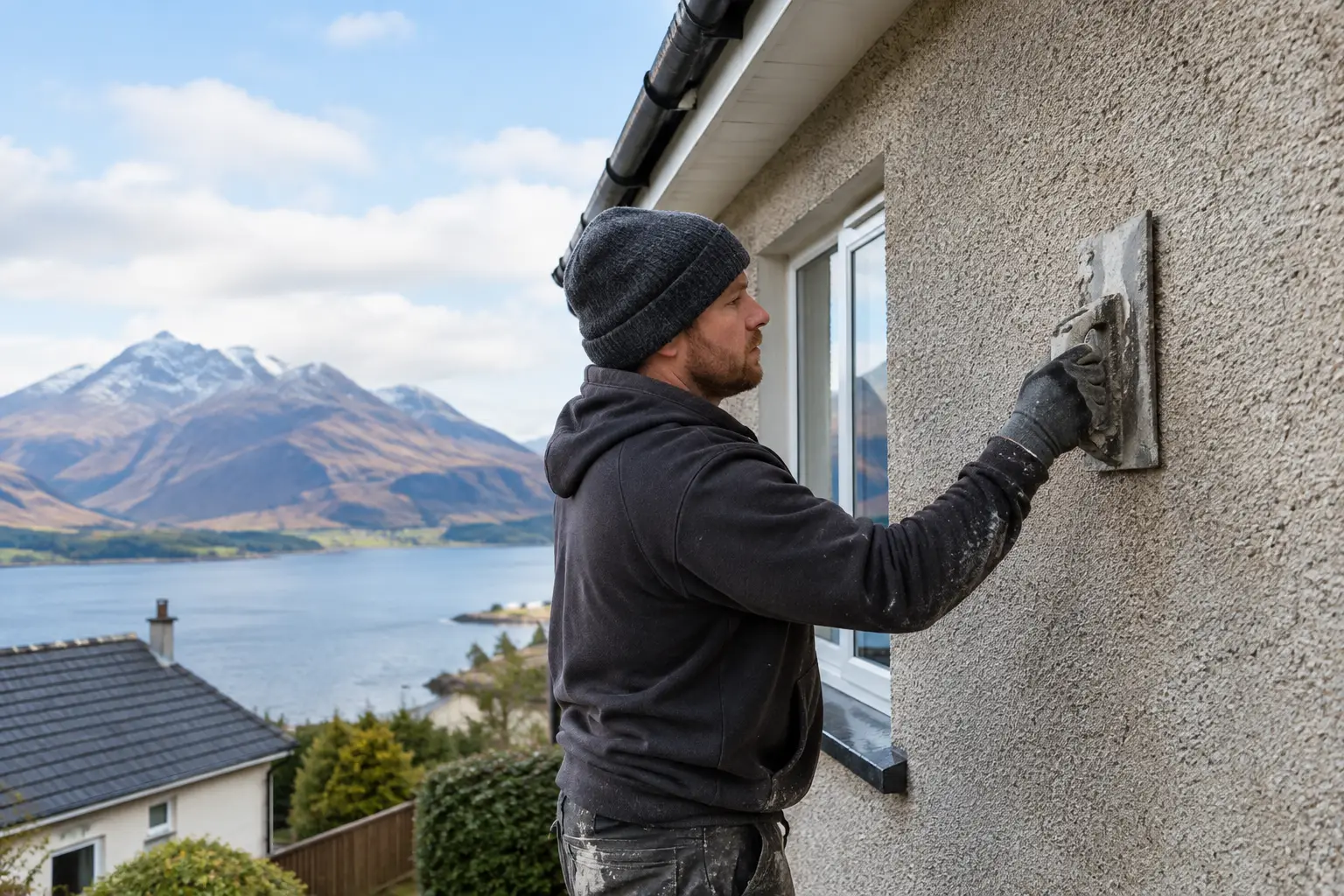
Is roughcasting worth it? See how this durable exterior finish protects Scottish homes, what affects the cost, and whether repair is enough for you...