
October 10, 2026
A practical roughcast maintenance guide Scotland homeowners can use to spot damp, cracks and weather damage before repairs become more costly over winter.

A chimney rarely fails all at once. More often, it starts with a small damp patch on an upstairs ceiling, a bit of mortar on the ground after windy weather, or a stain running down the breast indoors. By the time most people start searching for chimney repair specialists, the problem has usually been building for a while.
That matters because chimneys sit above the main roofline and take the worst of the weather. In Central Scotland, constant rain, frost, high winds and age all work against brickwork, mortar joints, lead flashing and chimney pots. If repairs are left too long, what begins as a minor maintenance job can turn into water ingress, internal damage or a stack that is no longer safe.
A damaged chimney is not just a cosmetic issue. The stack is exposed on all sides, so once mortar starts breaking down or flashing lifts, water can get in quickly. That moisture then finds its way into loft spaces, ceilings, walls and roof timbers.
There is also the structural side to consider. A leaning stack, loose brickwork or a cracked crown can become a safety risk, particularly after storms. Even where the chimney is no longer in use, it still needs to remain sound and properly weatherproofed. An unused chimney can leak just as badly as an active one.
This is where experienced chimney repair specialists earn their keep. The job is rarely about one isolated fix. It often involves assessing how the chimney, roof coverings, leadwork and surrounding masonry are all performing together.
Some chimney defects are obvious from ground level, but many are not. Homeowners and landlords usually notice the effects before they spot the cause.
Loose or missing mortar is one of the most common early signs. If the joints between bricks are crumbling, the stack may need repointing before water gets deeper into the structure. You might also notice pieces of mortar on the roof, in gutters or on the ground below.
Leaks around the chimney are another frequent issue. Damp patches on ceilings near the breast, staining in the loft, or moisture appearing after heavy rain can all point to failed lead flashing, cracked render, damaged flaunching or porous brickwork. It depends on where the water is entering, which is why a proper inspection matters.
You may also see visible movement. A chimney stack that appears to lean, bulge or show stepped cracking should be checked promptly. Not every crack means the chimney is unsafe, but some do indicate movement that should not be ignored.
Other warning signs include a damaged or missing chimney pot, loose cowls, vegetation growth, spalling bricks, and white staining on masonry caused by trapped moisture and salts. If your property has had repeated roof leaks and the source has not been clear, the chimney is one of the first places worth checking.
There is no single chimney repair. The right solution depends on the age of the property, the condition of the stack and whether the chimney is still in use.
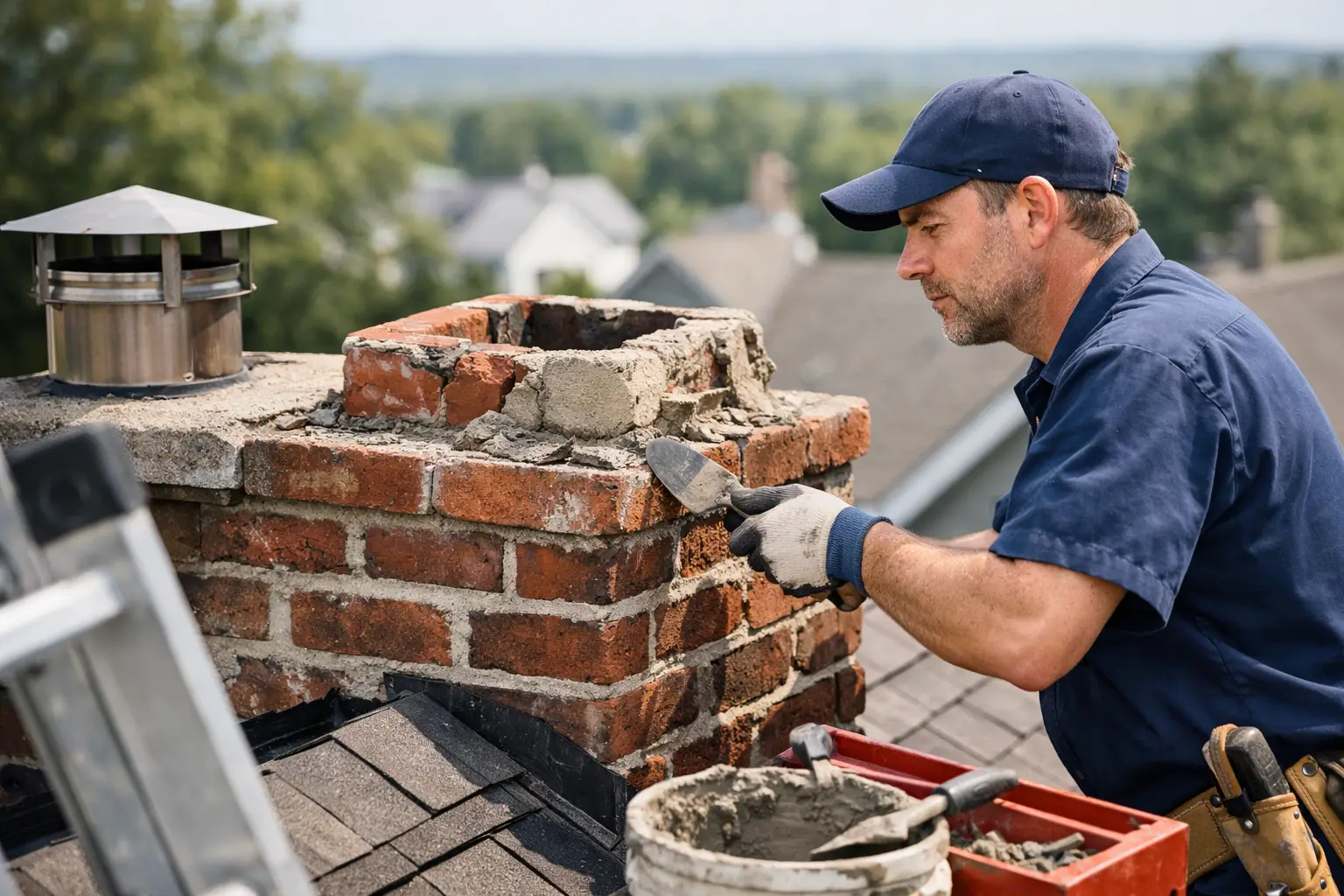
Repointing is one of the most common jobs. Over time, mortar joints wear back and allow water in. Carefully removing failed mortar and replacing it with suitable new pointing helps restore strength and weather resistance. On older properties, the choice of mortar matters. A repair that is too hard or unsuitable for the original brick can create further issues later.
Lead flashing repairs are also common. Flashing forms the watertight seal where the chimney meets the roof. If it has lifted, split or been poorly fitted in the past, water can track underneath tiles and into the roof structure. In some cases a local repair is enough. In others, the flashing needs to be replaced properly.
Then there is the top of the stack. Flaunching, which secures the chimney pot and sheds water, often cracks with age. A damaged crown or flaunching can let moisture into the top of the chimney and loosen pots over time. Rebuilding this area can prevent ongoing deterioration.
More advanced work may involve replacing damaged bricks, rebuilding part of the stack, or taking down and rebuilding the chimney from roof level upward if it has become unstable. That is a bigger job, but sometimes it is the most cost-effective option when patch repairs would only delay the inevitable.
This is where experience counts. Some chimneys look far worse than they are, while others appear fine from the ground but have serious defects once inspected up close.
If the problem is limited to failed pointing, localised flashing issues or minor cracks in flaunching, repair is usually the sensible route. It keeps costs under control and extends the life of the existing structure.
If the brickwork is badly weathered, the stack is leaning, or previous repairs have failed repeatedly, partial or full rebuilding may be the better long-term decision. Paying for repeated patch jobs on a chimney that is structurally tired can end up costing more.
A trustworthy contractor should explain the trade-off clearly. The cheapest quote is not always the best value if it only deals with the visible symptom rather than the root cause.
Chimney work is specialist work because it involves height, exposure and the need to protect the rest of the roof while repairs are carried out. Access needs to be planned properly, whether that means ladders, scaffold or another safe working setup.
The repair itself also needs to tie in with the surrounding roof coverings. A chimney does not sit apart from the roof – it is part of the same weatherproofing system. Poor workmanship around tiles, slates or lead can create fresh leaks even if the chimney masonry itself has been repaired.
For homeowners, this is one reason to use a contractor who understands both chimneys and roofing rather than treating them as separate issues. The join between the two is often where problems start.
Not all contractors approach chimney repairs with the same level of care. Some will offer a quick fix without fully investigating the cause. Others may overstate the extent of the problem. The right approach is balanced, practical and backed by clear communication.
Look for a company that explains what it has found in plain language, sets out the repair options and provides a clear quote. Insurance, a workmanship guarantee and a solid local reputation all matter, especially for work at height on older parts of the property.
It also helps to choose a team that is used to the kind of weather and housing stock found across Falkirk and the wider Central Scotland area. A chimney on a traditional stone or brick property may need a different repair approach from one on a newer home. Local experience makes those decisions easier.
For many customers, responsiveness is just as important as technical ability. If bricks have come loose or a chimney has been affected by storm damage, you need a contractor who can attend promptly and advise whether temporary safety measures are required before full repairs are carried out.
A proper chimney inspection should look at more than just the obvious damage. The stack, pots, flaunching, pointing, flashing and surrounding roof area all need to be checked together. Signs of damp in the loft or upper rooms may also help narrow down the source of the problem.
Sometimes the answer is straightforward. Sometimes it takes a closer look to distinguish between a roof leak, a flashing failure and moisture coming through the chimney masonry itself. That is normal. Water does not always travel in a neat line.
At Forth Valley Roofing, the aim is always to recommend the repair that makes sense for the property, the budget and the long-term condition of the roof. That means no guesswork, no unnecessary extras and no vague advice.
Early repair usually means more options and lower cost. Repointing a stack or replacing damaged flashing is far simpler than rebuilding masonry after years of water damage and frost exposure.
It also protects the rest of the property. A leaking chimney can affect insulation, timbers, plasterwork and decoration well beyond the stack itself. Sorting the issue early is often less disruptive than people expect, especially compared with the mess caused by ongoing damp.
If you have noticed signs of chimney wear, movement or leaking, getting it checked now is the practical next step. A sound chimney helps protect the roof, the structure below it and your peace of mind through the worst of the Scottish weather.
A practical roughcast maintenance guide Scotland homeowners can use to spot damp, cracks and weather damage before repairs become more costly over winter.

Learn how to assess heritage slate roofs, plan sympathetic repairs and protect a Central Scotland property from leaks, storm damage and costly disruption.
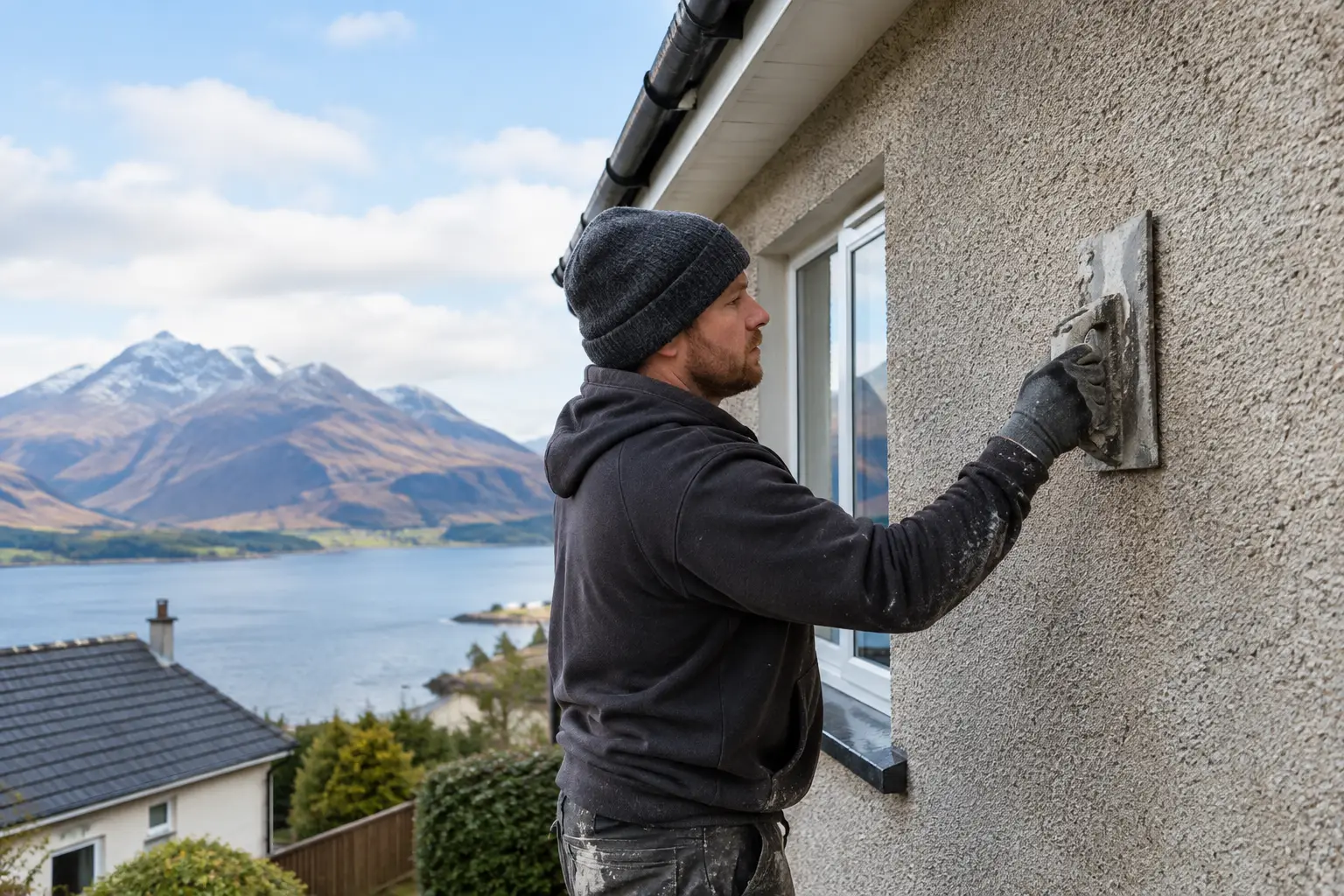
Is roughcasting worth it? See how this durable exterior finish protects Scottish homes, what affects the cost, and whether repair is enough for you...