

October 10, 2026
A practical roughcast maintenance guide Scotland homeowners can use to spot damp, cracks and weather damage before repairs become more costly over winter.

A stain on the ceiling rarely tells the full story. In most cases, the water has travelled from a different part of the roof, which is why a proper roof leak repair example is useful – it shows what really happens between spotting a problem indoors and fixing the fault outside.
For homeowners, landlords, and property managers, the biggest mistake is assuming the visible damp patch is the exact source of the leak. Roofs fail in predictable ways, but water does not always appear where it enters. It can track along felt, timbers, insulation, or rafters before it finally drips into a loft or room below. That is why leak repairs need careful inspection rather than guesswork.
Imagine a semi-detached house after a spell of heavy wind and rain. The homeowner notices a brown mark forming near the top corner of an upstairs bedroom. It is worse after storms, but seems to dry slightly between wet days. From inside, it looks minor. From outside, the roof appears mostly sound at ground level.
Once inspected properly, the issue turns out to be cracked mortar bedding and lifting lead flashing around the chimney. A few slates nearby have also slipped slightly, leaving a route for water to enter during wind-driven rain. This is a very common combination in older Scottish properties, especially where roofs have handled years of weather exposure.
The repair itself is not just one quick patch. First, the damaged area around the chimney is exposed safely. Loose mortar is removed, slipped slates are re-secured or replaced, and the lead flashing is either dressed back into place or renewed if it has split or pulled away. If the underlying membrane has been damaged by prolonged water ingress, that section may also need replacement. Only when the whole weak point is addressed does the leak stop reliably.
That matters because many temporary fixes hold for a few weeks, then fail in the next spell of bad weather. A proper repair focuses on the entry point, the surrounding materials, and the reason the problem developed in the first place.
A leaking roof is not always caused by a missing tile. It can be damaged flashing, worn valleys, failed flat roof seams, blocked gutters forcing water back under the roof edge, or cracked chimney pointing. On some properties, condensation in the loft is even mistaken for a roof leak.
This is where experience counts. The same symptom indoors can come from several different faults outside. A dark ceiling patch near a chimney breast may point to flashing failure, but it could also be porous masonry, defective flaunching around chimney pots, or water entering higher up and running down internal surfaces.
The trade-off is simple. A fast guess may sound cheaper at first, but if the wrong area is repaired, the leak keeps coming back and the final cost is usually higher. A thorough inspection takes a little more care, but it saves unnecessary work.
In a good roof leak repair example, the key step is tracing the full route of water. That means checking the roof covering, leadwork, valleys, ridge lines, abutments, gutters, soffits, and loft space where accessible. The goal is not to treat the symptom. It is to identify the failure point and test whether nearby materials have also been weakened.
On a pitched roof, a reliable repair may involve replacing broken slates or tiles, renewing felt support trays, securing loose ridge or hip sections, and repairing lead flashings. On a flat roof, it might mean cutting out a failed area, re-welding membrane joints, improving edge detailing, or correcting a weak upstand where rainwater has been getting in.
The right method depends on the roof type, age, and general condition. If the roof is otherwise sound, a localised repair is often the sensible option. If there are faults across several areas, repeated patching may not be the best value.
Many leaks start quietly. A little staining in the loft, a drip after heavy rain, or slight peeling paint near the ceiling line can seem manageable. The trouble is that roof leaks rarely improve on their own.
Timbers can begin to hold moisture long before obvious damage appears indoors. Insulation loses effectiveness when wet. Plasterboard softens. In some cases, the leak reaches electrical fittings or causes hidden mould growth. By the time the room below looks badly affected, the repair may involve much more than the roof covering.
This is especially true after storms. High winds can lift edges, shift slates, loosen flashing, and open small gaps that are not obvious from the ground. In places like Falkirk and across Central Scotland, where wind-driven rain is a regular issue rather than a rare one, minor defects can become active leaks very quickly.
There is a place for temporary work. If a roof is leaking during severe weather, an emergency measure may be needed to reduce water ingress until conditions are safe for full repair. That could include a temporary waterproof covering or a short-term seal on a vulnerable section.
But temporary and permanent are not the same thing. Emergency work protects the property in the short term. It should not be mistaken for a finished repair unless the fault has actually been corrected using the right materials and method.
Homeowners are right to ask what is being done now, what still needs done later, and how long the interim fix is expected to last. Clear communication matters just as much as workmanship when a property is vulnerable to further water damage.
One reason people search for a roof leak repair example is to understand likely cost. The honest answer is that price depends on access, roof pitch, materials, height, and how far the leak has spread.
Replacing one slipped slate is very different from renewing chimney flashing and repairing rotten battens beneath. Likewise, a leak on a low extension roof is generally simpler to address than one high up around a chimney stack. If scaffolding is required for safe access, that changes the cost as well.
The important point is not chasing the cheapest number. It is understanding whether the quote reflects a proper diagnosis and a lasting repair. A fair price for the correct work is better value than a low price for the wrong work.
If water is actively coming in, move furniture and valuables away from the affected area and use a bucket or container to catch drips. If a ceiling starts to bulge with trapped water, treat it seriously, as the plaster may weaken. If there is any chance water is near electrics, switch off the affected circuit if safe to do so and seek professional advice.
Take photos of visible damage, both inside and outside if you can do so safely from the ground. That can help track whether the issue is worsening and may also be useful for insurance purposes in some cases.
What you should not do is climb onto the roof without the right equipment or experience. Wet roofs, storm damage, and loose materials create obvious risk. A leaking roof is a repair issue, not a DIY balancing act.
A good roofer should explain what they have found, what repair is needed, and whether there are any signs of wider deterioration. If the problem could be solved with a straightforward local repair, that should be said plainly. If the roof is showing multiple failures, that should also be explained honestly.
Look for a contractor who offers insured work, clear quotations, and realistic timescales. Guarantees matter, but so does the company’s willingness to stand behind its work and keep customers informed. For many property owners, that dependable approach is just as important as the repair itself.
Forth Valley Roofing often sees leak issues that started as one small fault and worsened because the first repair did not deal with the cause. That is why careful inspection and straightforward advice remain central to good roofing work.
A roof leak does not need dramatic damage to become expensive. The sooner the source is found and fixed properly, the better chance you have of keeping the repair simple, the property dry, and the wider structure protected.
A practical roughcast maintenance guide Scotland homeowners can use to spot damp, cracks and weather damage before repairs become more costly over winter.
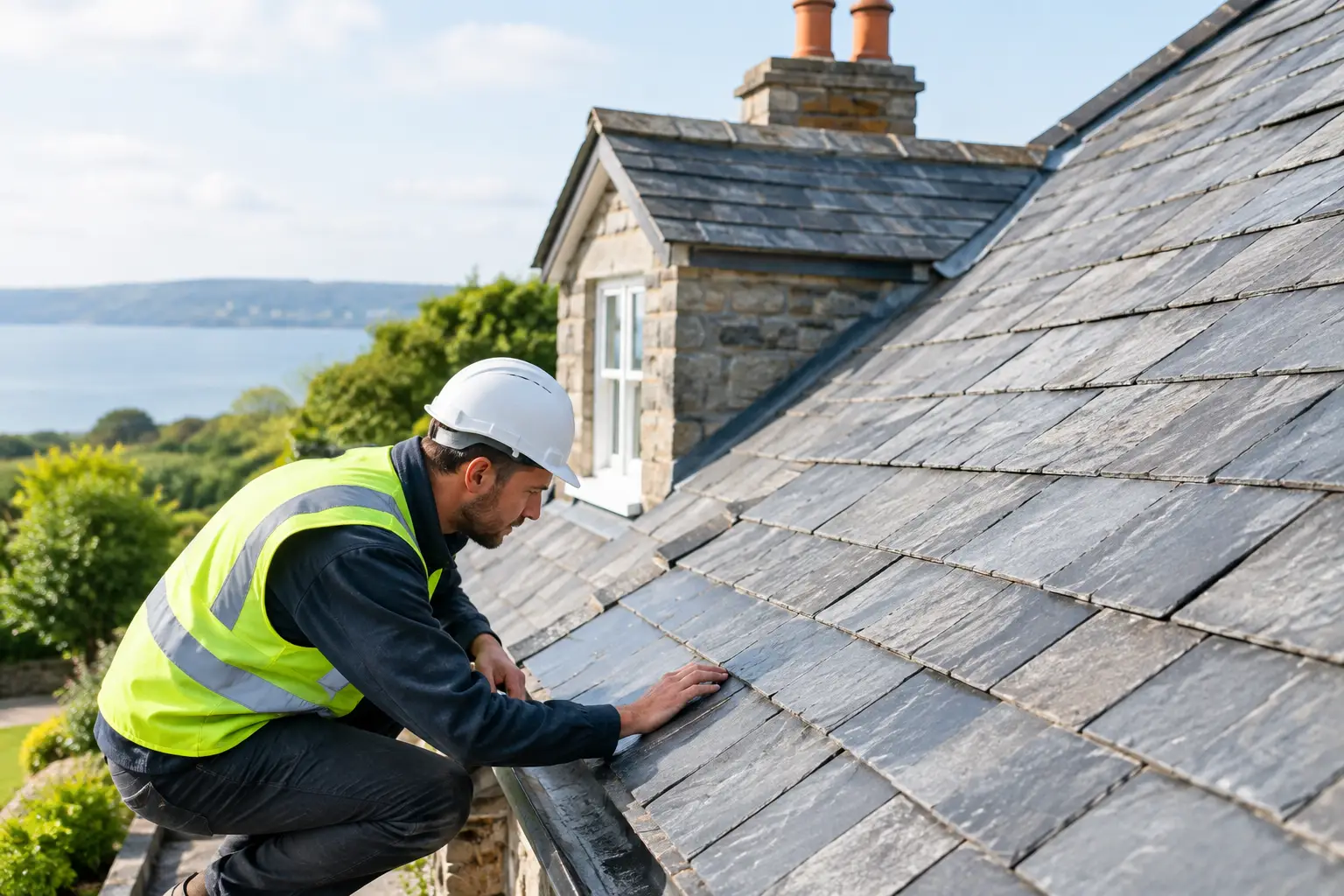
Learn how to assess heritage slate roofs, plan sympathetic repairs and protect a Central Scotland property from leaks, storm damage and costly disruption.
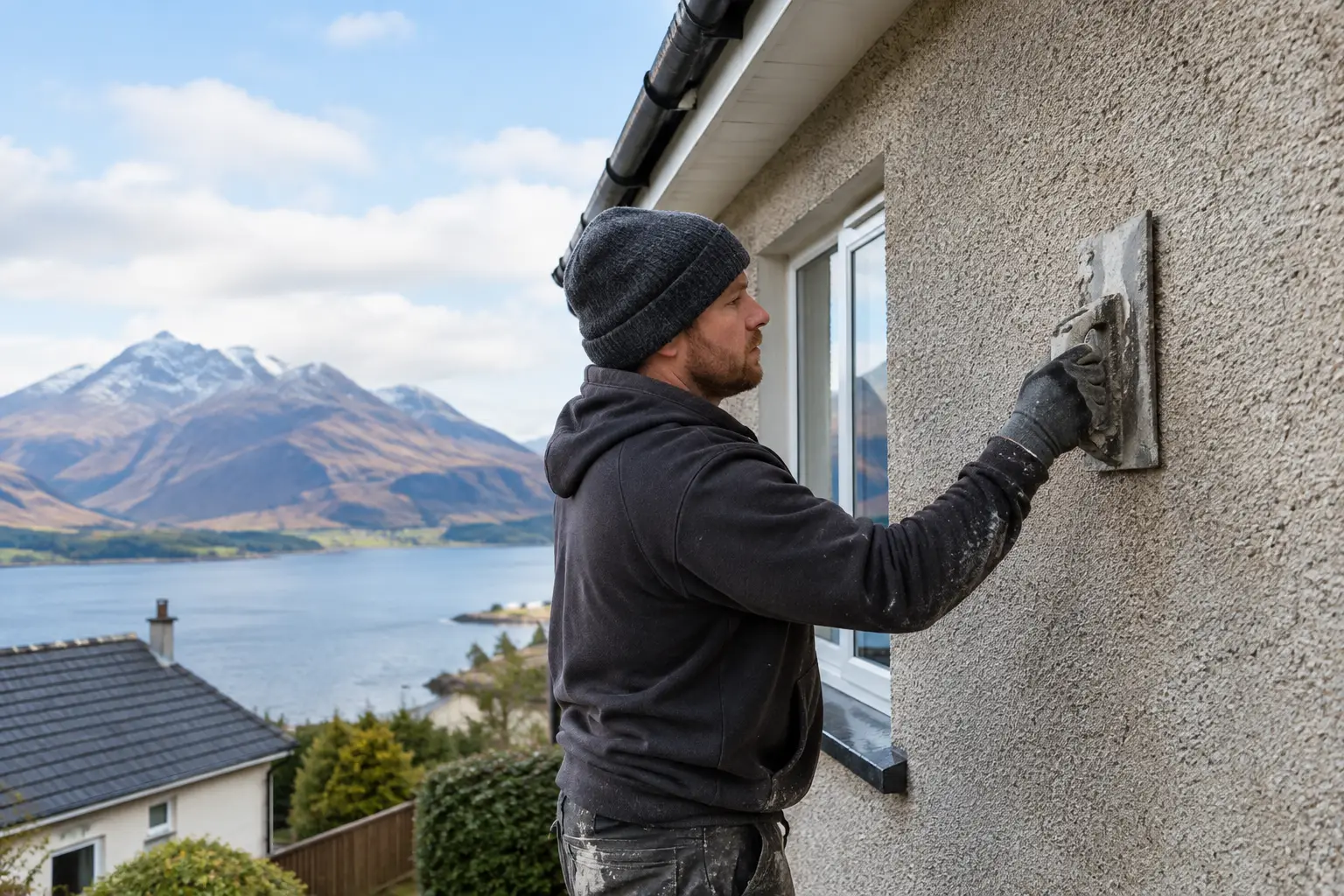
Is roughcasting worth it? See how this durable exterior finish protects Scottish homes, what affects the cost, and whether repair is enough for you...